



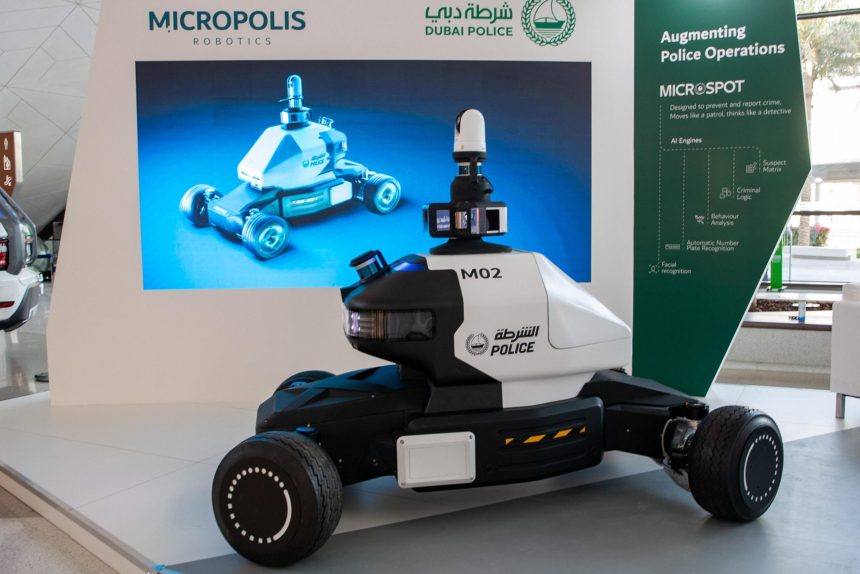
AfricAI has entered into a multi-year, exclusive distribution and deployment agreement with Micropolis Robotics. Under the terms of the deal, AfricAI becomes the sole partner authorised to commercialise, deploy, and scale Micropolis’s advanced autonomous robotics platforms throughout the continent.
The agreement grants AfricAI exclusive territorial rights, effectively prohibiting Micropolis from engaging in direct sales within Africa or appointing alternative distributors or third-party agents.
This structure positions AfricAI as the primary execution and go-to-market platform for Micropolis technologies serving African industrial, security, logistics, and infrastructure sectors.
“This is not a collaboration — it is a market-shaping mandate,” said Fareed Aljawhari, CEO of Micropolis Robotics. “AfricAI now represents the exclusive gateway through which Micropolis technologies enter Africa. Their sovereign AI vision, operational reach, and regulatory fluency make them the only partner capable of executing at a continental scale.”
From Artificial Intelligence to Physical AI
Unlike many technology partnerships on the continent that focus primarily on software-based artificial intelligence, the AfricAI–Micropolis agreement extends firmly into what industry experts describe as “physical AI”—intelligent machines designed to operate autonomously in complex, real-world environments.
Through the partnership, Micropolis’s robotics platforms will be integrated with AfricAI’s sovereign AI stack, enabling end-to-end solutions that combine data, intelligence, and autonomous execution.
Planned applications span a wide range of sectors, including security and surveillance, logistics and port operations, industrial automation, smart infrastructure, and municipal robotics adapted to African operating conditions.
Industry observers are already describing the partnership as one of the most consequential robotics market entries in Africa to date, signalling a shift from experimental pilots towards large-scale, institutional deployment of autonomous systems.
What You Need to Know
At the heart of the agreement is an emphasis on sovereignty, localisation, and regulatory alignment. AfricAI’s role extends beyond distribution to include localisation of robotics systems, regulatory compliance across multiple jurisdictions, and the development of deployment frameworks that align with national priorities.
The partnership includes a structured localisation framework designed to anchor robotics deployment, workforce training, and skills transfer within Africa.
Long-term, performance-linked expansion rights and automatic renewals are also embedded in the agreement, signalling a sustained commitment rather than a short-term market entry.
“Africa does not need imported automation — it needs sovereign, context-aware intelligent systems. This exclusive mandate allows AfricAI to industrialise robotics deployment at scale while retaining control, compliance, and value creation on the continent,” HRH Prince Malik Ado-Ibrahim, Executive Chairman of AfricAI, stated.
Initial Deployments and Continental Expansion
Initial deployments under the agreement are expected to focus on security, smart infrastructure, and logistics, sectors where autonomous systems can deliver immediate efficiency, safety, and resilience gains. These early rollouts will serve as proof points before phased expansion across multiple African states.
The robotics rollout forms part of AfricAI’s broader continental strategy spanning artificial intelligence, data infrastructure, and intelligent physical systems. By integrating robotics into this wider ecosystem, AfricAI aims to position itself as a foundational player in Africa’s next phase of industrial and digital transformation.
Analysts suggest the agreement could enable African economies to bypass traditional, capital-heavy industrialisation pathways in favour of autonomous, AI-driven infrastructure.
By deploying robotics systems purpose-built for local conditions, the partnership offers a pathway to improved productivity, enhanced security, and more resilient infrastructure.
Focus on Responsible Innovation
The deal also places AfricAI among a small group of companies globally acting as exclusive robotics gatekeepers across entire regions, an unusual position that concentrates both opportunity and responsibility.
Both AfricAI and Micropolis have emphasised their commitment to responsible innovation, ESG compliance, and the development of sustainable robotics ecosystems.
Beyond commercial objectives, the companies say the partnership is designed to strengthen long-term economic resilience, support workforce development, and ensure ethical deployment of autonomous technologies.
As Africa increasingly positions itself as a frontier for next-generation infrastructure, industry leaders say the AfricAI–Micropolis agreement signals a growing confidence that advanced robotics, if deployed with local context and sovereign oversight, can play a central role in shaping the continent’s future.
Talking Points
It is significant that AfricAI has secured an exclusive, continent-wide mandate rather than a conventional partnership, positioning the company as the sole gateway for Micropolis Robotics’ advanced autonomous systems in Africa.
This agreement signals a decisive shift from software-led AI narratives towards physical AI, intelligent machines operating in real-world environments such as security, logistics, and smart infrastructure, where impact is immediate and measurable.
At Techparley, we see this deal as a strategic response to a long-standing gap in Africa’s industrial landscape: the absence of locally governed, scalable robotics platforms aligned with regulatory realities and sovereign interests.
By prohibiting direct sales and third-party distributors, the structure of the agreement places execution, localisation, and compliance firmly in African hands, a departure from extractive technology entry models historically seen on the continent.
As deployments expand, structured localisation, skills transfer, and ecosystem development will determine whether this becomes a true industrial catalyst or remains a high-profile but limited rollout.
With long-term expansion rights and performance-linked renewals, the agreement suggests confidence from both parties, but also raises the bar for delivery.
If executed effectively, this partnership could mark a pivotal moment where Africa moves from consuming imported automation to governing and industrialising autonomous systems on its own terms.
——————-
Bookmark Techparley.com for the most insightful technology news from the African continent.
Follow us on Twitter @Techparleynews, on Facebook at Techparley Africa, on LinkedIn at Techparley Africa, or on Instagram at Techparleynews.