


Zimbabwe, fintech startup Ndarama has launched a pioneering investment and lending platform that allows users to invest as little as US$1, use those investments as collateral, and access US dollar-denominated loans directly through mobile money, all without touching cryptocurrency or digital wallets.
Operating within the Securities and Exchange Commission of Zimbabwe (SECZIM) regulatory sandbox, Ndarama is standing at the intersection of regulated finance, blockchain automation, and everyday mobile money usage.
By quietly embedding blockchain technology behind the scenes, the platform combines tokenised real-world assets, programmable collateral, and fiat loan disbursement via EcoCash and OneMoney, a combination its founders claim has not been achieved anywhere globally.
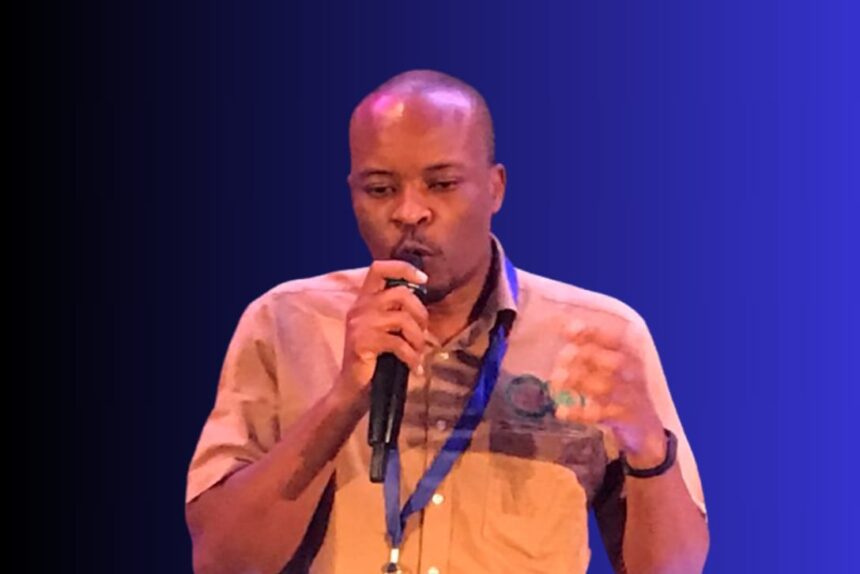
As Ndarama founder and CEO John-Paul Matenga puts it, “This isn’t crypto for crypto users. It’s blockchain infrastructure quietly working in the background to deliver real financial utility, real dollars, real assets, real protection, through systems people already trust and understand.”
What Ndarama Is Doing
At its core, Ndarama is redefining how Zimbabweans can participate in investment and credit markets by lowering both financial and technological barriers.
The startup has launched the country’s first Collective Investment Scheme (CIS) for tokenised securities, placing it under the same regulatory classification as traditional mutual funds and Real Estate Investment Trusts (REITs).
This means Ndarama is not operating as an informal crypto experiment but as a regulated financial vehicle, supervised by SECZIM.
While decentralised finance platforms globally have popularised the idea of programmable collateral for crypto-to-crypto lending, and traditional financial institutions have long offered fiat loans without tokenisation, Ndarama is bridging a gap that has remained largely unexplored.
According to the company, “no platform globally has combined regulated tokenised assets, programmable collateral, and fiat loan disbursement via mobile money, until now.”
This hybrid approach allows users to access sophisticated financial tools without needing to understand the complex technology underpinning them.
How the Investment Platform Works
Ndarama enables users to invest small amounts of money into tokenised real-world assets, such as property. Tokenisation simply means that a real asset is digitally represented and divided into smaller units, allowing multiple people to own fractional shares of it.
Through this model, high-value assets that were previously out of reach for most citizens become accessible to everyday investors.
Equally important is that users can start with as little as US$1, making the platform particularly attractive in an economy where disposable income is limited.
The entire process is designed to feel familiar, with transactions conducted through standard financial interfaces rather than crypto exchanges or digital wallets.
Blockchain technology operates in the background to ensure accurate ownership records and automated compliance, while users experience what feels like a conventional investment platform.
The Loan Benefits on the Platform
Beyond investing, Ndarama’s most distinctive offering lies in its loan functionality. Once users have invested in tokenised assets, those digital holdings can be used as collateral to access loans.
The collateral is “programmable,” meaning the system automatically enforces lending rules, such as loan limits and repayment conditions, without manual intervention.
Crucially, loans are denominated in US dollars and are paid out directly via mobile money platforms like EcoCash and OneMoney. Users do not need to convert funds into cryptocurrency or manage volatile digital assets.
This structure mirrors familiar lending concepts, using assets to secure loans, but delivers them through faster, more automated systems.
For many users, it represents access to USD liquidity without the friction, paperwork, or exclusion often associated with traditional lending institutions.
Blockchain: The Invisible Security at Work
Although blockchain is central to Ndarama’s platform, it is intentionally kept out of the user’s direct experience. The technology automates asset tracking, collateral management, and compliance, reducing the risk of fraud and human error while increasing transparency.
Unlike typical crypto platforms, where users must actively engage with wallets and tokens, Ndarama treats blockchain as infrastructure rather than a product.
As Matenga explains, “It’s blockchain infrastructure quietly working in the background to deliver real financial utility, real dollars, real assets, real protection.”
By hiding technical complexity, Ndarama ensures that users interact only with tools they already understand, such as mobile money, while still benefiting from the security and efficiency of blockchain automation.
Why This Matters for Everyday Zimbabweans
For everyday Zimbabweans, Ndarama’s model addresses several long-standing challenges at once, including limited access to investment opportunities, difficulty securing USD loans, and mistrust or unfamiliarity with cryptocurrency.
By combining regulated tokenised investments, automated collateral, and mobile-money-based loan disbursement, the platform opens doors that were previously closed to small-scale investors and informal earners.
Just as importantly, operating within the SECZIM regulatory sandbox provides an added layer of credibility and consumer protection.
Users are not being asked to leap into an unregulated digital frontier; instead, they are participating in a system overseen by financial authorities and structured like traditional collective investment schemes.
In essence, Ndarama is demonstrating how advanced financial technology can be adapted to local realities.
Rather than forcing users to change their behaviour or adopt unfamiliar tools, the startup brings innovation into systems people already trust, potentially setting a new standard for inclusive finance not only in Zimbabwe, but across emerging markets.
Talking Points
While Ndarama’s model is genuinely innovative and well-aligned with Zimbabwe’s financial realities, its long-term success will depend on execution, regulatory continuity, and user trust rather than technology alone.
The platform smartly avoids the stigma and volatility associated with cryptocurrency by hiding blockchain infrastructure behind familiar mobile-money rails, but this abstraction also risks leaving users poorly informed about how their assets are managed, valued, or liquidated in stressed scenarios.
Regulatory sandbox approval under SECZIM adds credibility, yet sandbox participation is not the same as full-scale regulatory maturity, and scaling beyond pilot conditions could expose governance, liquidity, and risk-management challenges, especially around asset valuation and loan defaults.
Additionally, while US$1 entry points and USD-denominated loans are attractive, the sustainability of offering dollar liquidity in a fragile macroeconomic environment will/should be closely watched.
Notwithstanding, Ndarama’s biggest test will be proving that tokenised real-world assets can remain transparent, liquid, and fairly priced at scale, without replicating the same access and trust gaps that have historically limited people’s financial system.
_______________________
Bookmark Techparley.com for the most insightful technology news from the African continent.
Follow us on X/Twitter @Techparleynews, on Facebook at Techparley Africa, on LinkedIn at Techparley Africa, or on Instagram at Techparleynews