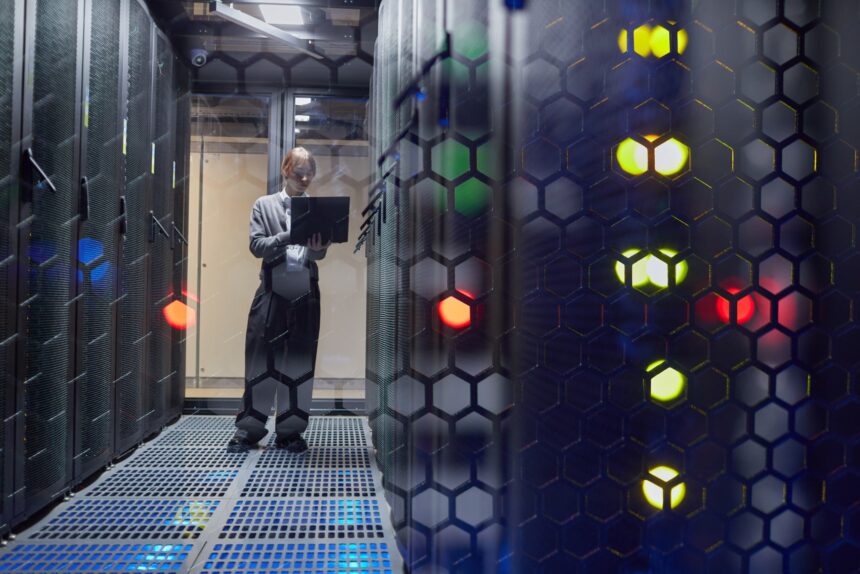
Every day, millions of teenagers open apps, stream music, watch videos, play games, and send messages online. It often feels like the internet exists in an invisible place called “the cloud.” But in reality, the internet is not floating somewhere in the sky. It lives in real buildings on Earth known as data centers.
These powerful facilities are packed with thousands of specialized computers that store information and deliver it to your phone, tablet, or laptop within seconds.
When you upload a photo, watch a video, or save a document online, the data travels through high-speed cables to these buildings, where it is stored, processed, and sent back whenever you need it.
Understanding data centers helps young people see that the digital world is built on physical infrastructure, machines, cables, electricity, and security systems working together behind the scenes to keep the internet running every second of the day.
What Is a Data Center? (The Physical “Cloud”)
A data center is a specially designed building, or sometimes a large section of a building, created to house important computer equipment. These facilities are the real places where the “cloud” actually exists.
Inside a data center, you will find rows and rows of tall metal racks, each filled with powerful computers called servers. Servers are different from the computers we use at home. Instead of running games or homework software, servers are designed to store huge amounts of information and respond to requests from users around the world.
For example, when someone opens a social media app or streams a video, their device sends a request to a server in a data center. The server quickly finds the information and sends it back to the user’s device.
Another important feature of data centers is that they operate all day and night. Unlike home computers that people shut down, servers run 24 hours a day, seven days a week, ensuring that websites, games, and online services are always available.
Because of their role in storing and delivering information, data centers are often described as the backbone of the digital economy. They support almost everything we do online, from messaging friends to using banking apps.
Where Does the Internet Actually Live?
When people say they uploaded something “to the internet,” it might sound like the information floats somewhere in the air. In reality, data travels through a global network of cables and servers.
Here is how the journey works. When you send a message, post a photo, or stream a video, your device sends data through fiber-optic cables. These cables are incredibly fast and can carry massive amounts of information using light signals.
Some of the most important fiber-optic cables even run under oceans, connecting continents and countries together. The data eventually reaches servers inside data centers, where it is stored or processed. When someone wants to access that information again, the servers send it back through the network.
Sometimes companies store data in smaller data centers located closer to users. These are called edge data centers. Their purpose is to reduce delays and make apps load faster. For instance, if a video is stored closer to your city, it will stream more smoothly than if it had to travel across the world.
So, rather than living in the clouds, the internet actually lives in a global system of buildings, computers, and cables spread across the planet.
What’s Inside a Data Center? (More Than Just Computers)
While servers are the most important part of a data center, they are not the only technology inside these buildings. Running thousands of computers at once creates many challenges, especially heat and power usage.
Cooling Systems
Servers generate a lot of heat when they operate. If the temperature becomes too high, the machines can slow down or even fail. To prevent this, data centers use large industrial cooling systems that constantly circulate cold air.
These cooling systems are similar to giant air conditioners designed specifically for computer equipment. They keep temperatures stable so that the servers can run safely and efficiently.
Backup Power
Since the internet must work all the time, data centers cannot afford to lose electricity. To solve this problem, they use uninterruptible power supplies (UPS) and backup generators.
If city power suddenly fails, these systems automatically provide electricity to keep the servers running. This ensures that services like messaging, online gaming, and video streaming continue without interruption.
Security Systems
Because data centers store valuable information, they are protected with very strong security systems. Many facilities use surveillance cameras, security guards, and even biometric scanners such as fingerprint or eye recognition.
Only authorized technicians can enter sensitive areas. These security measures help protect personal data and prevent cyber threats.
Why Data Centers Matter to You
Even though most teenagers never see a data center in person, these facilities have a direct impact on everyday digital life.
Faster Internet Experiences
The distance between you and a data center affects how fast data travels. If the servers are nearby, apps load quickly and games feel smoother. If the servers are far away, you may experience delays or “lag.”
Powering Artificial Intelligence
Modern technologies such as AI tools require enormous computing power. For example, systems like ChatGPT rely on powerful data centers filled with advanced processors that analyze and generate information rapidly.
As artificial intelligence becomes more popular, the demand for larger and more efficient data centers continues to grow.
Cloud Storage
Many people store photos, videos, and documents using cloud services like Google Drive or iCloud. Although it feels like the files are stored “in the cloud,” they are actually saved on servers inside real buildings somewhere in the world.
This means your memories and school files are safely kept on machines designed to store huge amounts of information.
The Big Picture: The Internet is Physical
Although the internet feels invisible, it is supported by real infrastructure, buildings, computers, cables, cooling systems, and electricity. Data centers work quietly behind the scenes to ensure that everything online functions smoothly.
In simple terms, the internet is not a magical cloud floating in the sky. It is a network of powerful machines inside secure warehouses, constantly working together to store, process, and deliver the information that powers the digital world.
Frequently Asked Questions (FAQs)
Is the internet really in the cloud?
Not exactly. The “cloud” is simply a nickname for data centers, physical buildings filled with servers that store and manage online data.
What is a server?
A server is a powerful computer designed to store information and respond to requests from other devices, such as phones, laptops, or tablets.
Why do data centers need cooling systems?
Servers produce a lot of heat while running. Cooling systems keep the machines at safe temperatures so they can operate efficiently without overheating.
What happens if the electricity goes out?
Most data centers have backup power systems and generators that automatically turn on to keep everything running even during power outages.
Why do some apps load faster than others?
Speed often depends on how close you are to the servers storing the data. The closer the data center is to you, the faster the information can reach your device.
_______________________
Bookmark Techparley.com for the most insightful technology news from the African continent.
Follow us on X/Twitter @Techparleynews, on Facebook at Techparley Africa, on LinkedIn at Techparley Africa, or on Instagram at Techparleynews