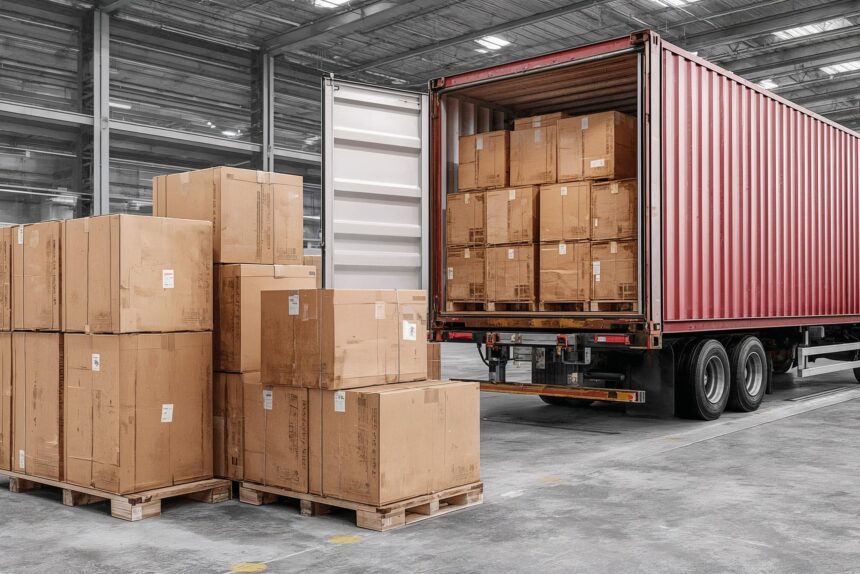
In 2020, at the peak of Nigeria’s e-commerce boom, one of the country’s fastest-growing online retailers faced a crisis. Orders were coming in. Demand was rising. Customers were ready to pay. But deliveries were failing.
Packages meant to arrive in 24 hours were taking three days. Some never arrived at all. Customer complaints piled up. Refunds increased. Growth stalled, not because the company lacked customers, but because it could not move goods reliably.
Around the same time, companies like Kobo360 were raising millions of dollars from global investors, including Goldman Sachs, to solve exactly this problem, connecting fragmented trucking networks across Africa.
In parallel, GIG Logistics was quietly building one of the most structured last-mile delivery networks in Nigeria, focusing not just on speed, but reliability.
What these companies understood early is what many founders only discover too late. In Africa, growth does not break companies, logistics does.
This is why logistics is no longer just an operational concern. It is now one of the most critical business opportunities on the continent.
Every thriving industry depends on the ability to move goods efficiently. Yet across Africa, that movement remains inconsistent, expensive, and deeply fragmented. This gap is not just a challenge. It is a market.
And for those who understand it deeply enough, it is one of the most powerful entry points into building a scalable, defensible business in Africa’s digital economy.
This Business Corner is not a generic guide. It is a ground-level report on how the logistics industry actually works, where the real opportunities are, and what it takes to build a company that survives in it.
Situation Report
Africa is not short on movement. Goods are constantly in transit, across cities, borders, and informal trade routes, but the systems that support that movement remain deeply inefficient.
More than 80% of freight on the continent moves by road, yet the underlying infrastructure is uneven. Highways connect major cities, but many secondary routes are poorly maintained. Congestion is routine, and in some corridors, informal checkpoints and manual processes still dictate the pace of trade.
A journey from Lagos to Accra, which should take under half a day under optimal conditions, can stretch into several days. Border crossings introduce paperwork delays, inconsistent enforcement, and coordination gaps between agencies. For businesses, this is not just an inconvenience, it is a cost centre.
Within cities, the problem shifts but does not disappear.
Urban logistics is defined by:
- Gridlocked traffic that disrupts delivery timelines
- Inconsistent or non-standard addressing systems
- Rising fuel and vehicle maintenance costs
- Highly fragmented delivery networks with limited coordination
The result is a system where predictability is rare, and reliability becomes a competitive advantage.
Yet, demand is accelerating at a pace the infrastructure is struggling to match.
E-commerce platforms are scaling. Informal commerce continues to dominate daily transactions. Small and medium-sized enterprises are expanding across cities and borders. At the same time, the African Continental Free Trade Area is expected to unlock a new wave of intra-African trade, potentially worth hundreds of billions of dollars over time.
According to Adewale Raji, a logistics and supply chain expert who has worked across West African transport networks, the issue is not a lack of activity, but a lack of coordination.
“The demand is already there, we are moving goods every single day,” he explains. “The real problem is inefficiency. Too many disconnected players, too much manual processing, and not enough visibility across the chain. Once you fix visibility and coordination, you unlock serious value.”
That “value” is what investors and founders are increasingly chasing. Because in markets like this, logistics is no longer just a support function. It is the bottleneck.
And in business, whoever controls the bottleneck controls the opportunity.
The Market Size
To understand why logistics is attracting serious attention, you have to follow both market demand and capital flow.
Start with the fundamentals.
Africa’s logistics industry is estimated to be worth between $150 billion and $180 billion annually, spanning freight, warehousing, last-mile delivery, and cross-border trade. When expanded to include the broader Middle East and Africa region, projections suggest the market could exceed $700 billion by 2030, driven by trade expansion, urban consumption, and digital commerce.
Zoom into Nigeria, and the picture becomes even more compelling.
With a population of over 200 million people, rising consumer demand, and a fast-growing e-commerce sector, logistics has quietly become a multi-billion-dollar backbone industry, supporting retail, FMCG distribution, pharmaceuticals, and manufacturing supply chains.
But market size alone does not tell the full story.
The real signal is capital.
Over the past decade, logistics startups across Africa have attracted increasing levels of funding from both strategic and institutional investors:
- Sendy raised over $20 million, with backing from Toyota Tsusho, signalling strong interest from global supply chain players
- Lori Systems secured funding from Google and SoftBank Vision Fund, positioning it as a data-driven logistics infrastructure play
- Kobo360 attracted investment from Goldman Sachs and the International Finance Corporation, marking one of the clearest endorsements of Africa’s logistics potential from global institutional capital
According to Sarah David, a financial analyst focused on emerging markets and infrastructure investments, logistics sits at a unique intersection of necessity and scale.
“Investors are not just funding logistics because it is growing, they are funding it because it is unavoidable,” she said. “Every sector depends on it, but in Africa, the inefficiencies are still so large that solving even a small part of the chain can create outsized returns.”
That inefficiency is the real opportunity. Unlike mature markets where logistics systems are already optimised, Africa still operates with:
- Fragmented supply chains
- Limited digital coordination
- High cost of movement relative to value
For investors, this creates room for disruption. For founders, it creates room for entry. Because in a market where logistics is still being built, the winners are not just competing for market share.
They are defining the market itself.
The Opportunities
If you think logistics is just delivery, you will fail.
Logistics is layers.
a. Last-mile delivery (Urban Africa)
This is where most people start and where competition is highest.
But niches exist:
- Pharmacy delivery
- Food and groceries
- B2B retail distribution
b. Mid-mile and trucking
This is where the big money is.
Moving goods between cities, warehouses, and ports remains inefficient and under-digitised.
c. Cross-border logistics
AfCFTA is opening doors but customs and coordination remain nightmares.
Solve this, and you are building continental infrastructure.
d. Warehousing and fulfilment
Amazon-style fulfilment barely exists at scale in Africa.
Whoever builds this layer wins e-commerce.
e. Cold-chain logistics
Agriculture loses billions annually due to poor storage and transport.
Healthcare needs reliable cold chains for vaccines and drugs.
f. Logistics technology (the silent goldmine)
Fleet tracking
Route optimisation
Payment systems
Inventory tools
Sometimes, the most profitable logistics company does not own trucks, it owns software.
Major Players: Learning from those already in the field
Let’s go deeper.
Kobo360 built a digital freight marketplace, connecting truck owners with cargo. Its model reduced empty return trips, a major inefficiency in African logistics.
GIG Logistics focused on structured delivery networks, building trust through reliability and physical presence.
Lori Systems took a data-driven approach, using analytics to optimise cargo movement.
Sendy started with motorcycles and expanded into a full logistics stack.
A common theme? They did not try to solve everything at once. They picked one layer and went deep.
Pitfalls: Where most founders fail
Let’s be blunt.
Logistics kills unprepared founders.
a. Thinking tech solves everything
It doesn’t. Logistics is operations first, technology second.
b. Burning cash on assets too early
Buying trucks too soon can sink your business.
c. Ignoring unit economics
Fuel, maintenance, and labour costs can quietly destroy margins.
d. Underestimating regulation
Cross-border logistics involves complex compliance.
e. Scaling too fast
Many startups collapse because they expand before stabilising operations.
f. Trust issues
Lost goods, delays, and poor communication can destroy your brand overnight.
This is not a “move fast and break things” industry. If you break things here, you lose money.
How to Launch: Building something that actually works
Now, the real question: how do you start?
Step 1: Start with a problem, not an idea
Talk to:
- Traders
- Drivers
- Warehouse operators
Find pain.
Step 2: Pick a narrow entry point
Examples:
- Last-mile delivery for Instagram vendors
- Logistics for pharmacies
- Cross-border SME trade
Specificity wins.
Step 3: Go asset-light first
Partner with:
- Independent drivers
- Existing fleet owners
Build demand before owning supply.
Step 4: Build trust before scale
In logistics, reputation is everything.
Deliver on time. Communicate clearly. Fix issues fast.
Step 5: Add technology gradually
Start simple:
- WhatsApp coordination
- Basic tracking
- Payment records
Then evolve into a platform.
Step 6: Legal and compliance
- Register your business
- Get transport licences
- Ensure insurance coverage
- Understand tax obligations
Do not ignore this.
Step 7: Monetisation strategy
- Per delivery
- Subscription for businesses
- Commission model
Know your margins early.
Call for Investors: Backing the backbone of African commerce
Global investors are paying close attention to Africa’s logistics sector and not by accident. The industry sits at the convergence of three powerful, long-term trends:
- Expanding intra-African and global trade
- Rapid digital transformation across industries
- Accelerating urbanisation and consumer demand
Together, these forces are placing unprecedented pressure on how goods move and creating a structural need for better logistics systems.
What makes this sector particularly compelling is its role as an enabler. Logistics is not a standalone market; it is the foundation upon which multiple industries depend. Retail cannot scale without distribution. Agriculture cannot reach markets without transport. Healthcare cannot function without reliable supply chains.
In Africa, these systems are still evolving. That gap between demand and infrastructure is what creates opportunity.
For investors, logistics offers more than high-growth potential. It presents a chance to back businesses that are building essential infrastructure, networks, platforms, and systems that entire economies will rely on over time.
Unlike trend-driven sectors, logistics is anchored in necessity. As trade volumes increase and digital commerce expands, the need for efficient, reliable movement of goods will only intensify.
Caveat: Do Your Research
Do not romanticise this business.
Logistics is:
- Messy
- Operational
- Capital-intensive
- Unforgiving
Before you start:
- Spend time in markets
- Ride with drivers
- Visit warehouses
- Study pricing models
Test small. Learn fast. Adapt. What works in Lagos may fail in Nairobi. What works in Nairobi may fail in Accra. There is no universal playbook.
If you solve logistics in Africa, you are solving commerce itself. You are enabling trade. You are supporting businesses. You are building infrastructure.
But this is not a business for guesswork. It rewards those who understand the ground.
So before you launch, go deeper, ask questions, challenge assumptions, and do your research.
——————-
Bookmark Techparley.com for the most insightful technology news from the African continent.
Follow us on Twitter @Techparleynews, on Facebook at Techparley Africa, on LinkedIn at Techparley Africa, or on Instagram at Techparleynews.