



Memories AI, an artificial intelligence startup, has announced a collaboration with semiconductor giant Nvidia to develop infrastructure that enables AI systems to store and recall visual memories, an emerging capability seen as critical to the future of wearables and robotics.
The partnership signals growing industry interest in moving beyond text-based AI towards systems that can interpret and interact with the physical world more effectively.
Through the collaboration, Memories AI will utilise Nvidia’s Cosmos-Reason 2, a reasoning vision-language model and Nvidia Metropolis, a platform designed for video search and summarisation.
These tools will support the development of what the company describes as a “visual memory layer” for AI systems, enabling machines to process, index and retrieve video-based information in a structured way.
The approach reflects a broader shift in artificial intelligence, where companies are increasingly focusing on multimodal capabilities, combining text, images and video to build more advanced systems.
What you need to know
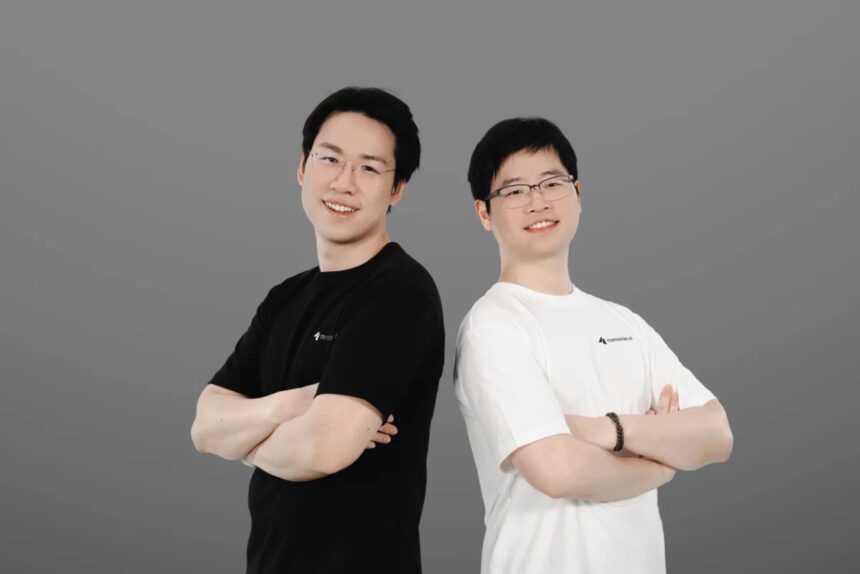
The idea behind the startup stems from the experience of its co-founder and chief executive, Shawn Shen, and co-founder and chief technology officer, Ben Zhou, who previously worked on artificial intelligence systems for Meta’s Ray-Ban smart glasses.
While building those systems, the founders identified a critical gap, that although AI-powered devices could record large amounts of video, they lacked the ability to meaningfully remember or retrieve that information.
Rather than continuing within Meta, the duo chose to launch Memories.ai in 2024 to address what they see as a foundational problem in the evolution of AI.
“AI is already doing really well in the digital world. What about the physical world?” Shen said. “AI wearables, robotics need memories as well. Ultimately, you need AI to have visual memories. We believe in that future.”
Moving beyond text-based memory
Recent advances in AI memory have largely focused on text. Platforms such as OpenAI’s ChatGPT, xAI, and Google’s Gemini have introduced features that allow systems to remember previous interactions.
However, Shen argues that text-based memory, while easier to structure and index, is insufficient for real-world applications where machines rely heavily on visual input.
Visual memory, by contrast, presents a more complex challenge, requiring systems to process vast amounts of unstructured video data and make it searchable and usable.
To address this challenge, Memories.ai has focused on two core areas, developing the infrastructure to embed and index video data, and capturing the datasets needed to train its models.
The company launched its large visual memory model (LVMM) in July 2025, designed to function as a multimodal system capable of indexing and retrieving visual information.
Shen likened the model to a smaller version of advanced multimodal systems such as Google’s Gemini Embedding models, highlighting its potential role in enabling AI systems to “remember” what they see.
Custom hardware to train AI models
As part of its data collection strategy, Memories.ai developed a wearable device called LUCI, used internally by “data collectors” to record video for training purposes.
Unlike conventional recording devices, LUCI is optimised for efficiency rather than high-definition output, addressing concerns around storage and battery consumption.
Shen emphasised that the company does not intend to commercialise the hardware, instead focusing on building the underlying AI models and infrastructure.
Since its launch, Memories.ai has raised $16 million, including an $8 million seed round in July 2025 and an additional $8 million extension. Investors include Susa Ventures, Seedcamp, Fusion Fund and Crane Venture Partners.
The company has also entered into a partnership with Qualcomm, with plans to run its models on Qualcomm processors later this year, an indication of its ambition to integrate with a wide range of hardware platforms.
While Shen confirmed that Memories.ai is already working with several wearable technology companies, he declined to name specific partners.
Betting on the future of wearables and robotics
Despite early traction, the company is taking a long-term view of commercialisation. Shen believes that while demand for visual memory systems is emerging, the broader market for AI wearables and robotics is still developing.
“In terms of commercialization, we are more focused on the model and the infrastructure, because ultimately we think the wearables and robotics market will come, but it’s probably just not now,” Shen said.
As artificial intelligence continues to evolve beyond text-based systems, the ability for machines to interpret and remember visual information could become a defining capability.
By positioning itself at the intersection of AI infrastructure, wearables and robotics, Memories.ai is betting that visual memory will become a foundational layer in the next generation of intelligent systems.
Whether that vision materialises will depend not only on technological breakthroughs but also on how quickly the broader ecosystem, hardware manufacturers, developers and end users adopts these capabilities.
Talking Points
Memories AI is tackling one of the next frontiers in artificial intelligence, giving machines the ability to “remember” what they see. This focus on visual memory addresses a gap in AI that goes beyond text-based interactions, positioning the company at the cutting edge of wearables and robotics.
The partnership with Nvidia is particularly significant. By leveraging Cosmos-Reason 2 and Metropolis, Memories.ai gains access to advanced reasoning and video processing tools, enabling the creation of a structured visual memory layer for AI systems.
At Techparley, we see this as a foundational step for the next generation of AI. Visual memory could transform how robots, smart glasses, and other devices interact with the physical world, moving AI from reactive tools to systems capable of recalling and learning from past experiences.
The company’s approach to data collection, using the LUCI wearable, highlights the importance of tailored infrastructure. By building its own hardware for training purposes, Memories.ai ensures the model is optimised for efficiency and real-world usability, rather than being constrained by conventional video recording limitations.
If successfully executed, Memories.ai’s technology could become a core layer for AI systems, enabling smarter, more responsive wearables and robotics that can interact with the world in ways previously imagined only in science fiction.
——————-
Bookmark Techparley.com for the most insightful technology news from the African continent.
Follow us on Twitter @Techparleynews, on Facebook at Techparley Africa, on LinkedIn at Techparley Africa, or on Instagram at Techparleynews.