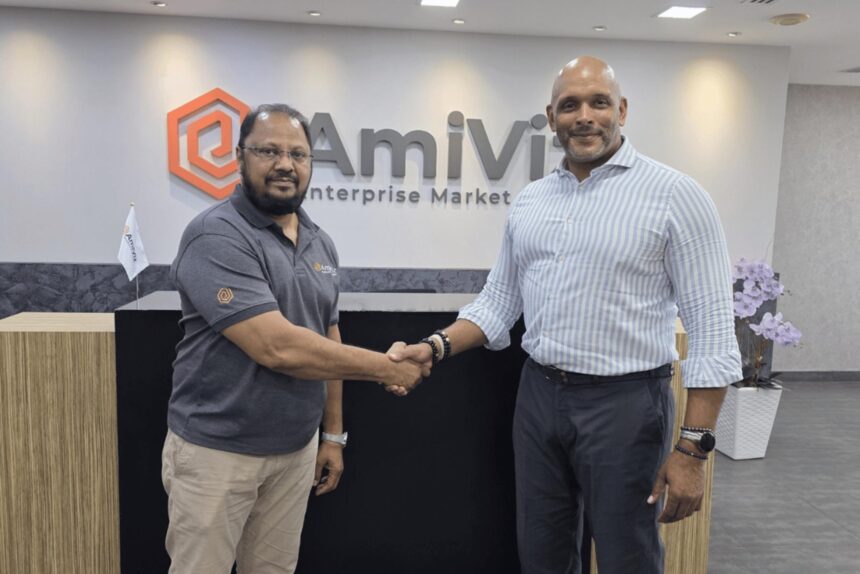
AmiViz, a cybersecurity and AI-focused value-added distributor, has entered into a strategic distribution partnership with FrontierZero, a SaaS security platform designed to help organisations secure increasingly complex SaaS and AI environments.
The collaboration aims to strengthen FrontierZero’s presence across Africa and the Middle East at a time when enterprises are rapidly adopting cloud-based applications and AI tools, often outside traditional IT governance frameworks.
The move comes as security teams struggle to maintain visibility over expanding digital ecosystems, where decentralised software procurement, third-party integrations, and identity sprawl are creating new and often unseen vulnerabilities.
“FrontierZero brings a powerful, intelligence-driven approach that gives organizations the clarity and control they need to secure their SaaS and AI environments. By combining their innovation with our channel strength, we are enabling customers to move from reactive security to real-time understanding of their exposure,” said Ilyas Mohammed, COO, AmiViz.
What you need to know
Across the MEA region, organisations are accelerating their use of SaaS and AI-driven tools to improve productivity and decision-making.
However, many of these tools are being adopted directly by business units without formal IT oversight.
While this decentralised approach speeds up innovation, it also introduces significant security challenges. These include unmanaged user access, over-permissioned accounts, shadow SaaS deployments, and increasingly complex third-party integrations.
Security teams often lack a unified, real-time view of how these environments evolve, creating blind spots that cybercriminals are increasingly able to exploit.
FrontierZero’s identity-centric approach to SaaS security
FrontierZero addresses these challenges by providing organisations with continuous visibility across their SaaS ecosystems through identity-focused intelligence and behavioural monitoring.
At the core of its platform is a “Pattern of Life” architecture, which establishes baseline behavioural norms across users, applications, and systems.
This allows the platform to detect anomalies such as compromised credentials, unusual login patterns, excessive permissions, or unexpected data movement linked to newly adopted AI tools.
The platform also monitors third-party and external access across suppliers, partners, and customers from within the organisation’s environment, offering what it describes as an inside-out view of exposure.
“We give security teams a live map of every external connection, track identity changes as people join, move, and leave, and shine a light on unmanaged SaaS and AI tools before they become a back door. Together with Ilyas and the AmiViz team, we’re excited to help organisations turn these overlapping risks into something they can measure, govern, and confidently report on,” said Karl McGowan, Co-Founder, FrontierZero.
From reactive security to real-time risk visibility
A key element of FrontierZero’s approach is its shift from reactive threat detection to proactive risk visibility. Through predictive discovery mechanisms, the platform identifies where vulnerabilities are likely to emerge before they are exploited.
This model is increasingly relevant as organisations move towards hybrid environments combining SaaS applications, AI tools, and traditional infrastructure.
By consolidating visibility across these layers, FrontierZero aims to help security teams move from fragmented monitoring to a more unified understanding of enterprise risk.
Under the new agreement, AmiViz will leverage its established channel network, technical expertise, and value-added services to expand FrontierZero’s reach across enterprise and government sectors.
The distributor will also support regional partners through training, enablement programmes, and co-marketing initiatives designed to drive adoption of visibility-first security models.
Regional cybersecurity challenges drive demand for new models
The partnership reflects broader shifts in the cybersecurity landscape across the Middle East and Africa, where rapid digital transformation is outpacing legacy security frameworks.
As organisations adopt more cloud-based services and AI tools, the complexity of managing identities, permissions, and third-party access continues to grow.
FrontierZero and AmiViz are positioning their collaboration as a response to this gap, aiming to equip organisations with tools that provide continuous visibility and governance over increasingly distributed digital environments.
Both companies have emphasised their commitment to strengthening cybersecurity resilience across the region.
Talking Points
It is significant that AmiViz is expanding its distribution footprint across the Middle East and Africa through a partnership with FrontierZero, at a time when SaaS and AI adoption is accelerating faster than most organisations can secure their environments.
This partnership directly responds to a growing and often overlooked risk: the rise of shadow SaaS, unmanaged AI tools, and third-party integrations introduced outside traditional IT oversight.
At Techparley, we see this as part of a wider shift in enterprise security, where visibility is becoming just as important as prevention, especially as identity and access have become the new perimeter.
FrontierZero’s focus on real-time SaaS mapping and identity intelligence introduces a more proactive security posture, allowing organisations to detect anomalies before they escalate into breaches.
As this partnership scales, there is a clear opportunity for AmiViz and FrontierZero to drive stronger security awareness and capability building through channel partners. With the right execution, this collaboration could meaningfully improve how organisations in the Middle East and Africa manage SaaS, identity, and AI-driven risk.
——————-
Bookmark Techparley.com for the most insightful technology news from the African continent.
Follow us on Twitter @Techparleynews, on Facebook at Techparley Africa, on LinkedIn at Techparley Africa, or on Instagram at Techparleynews.