



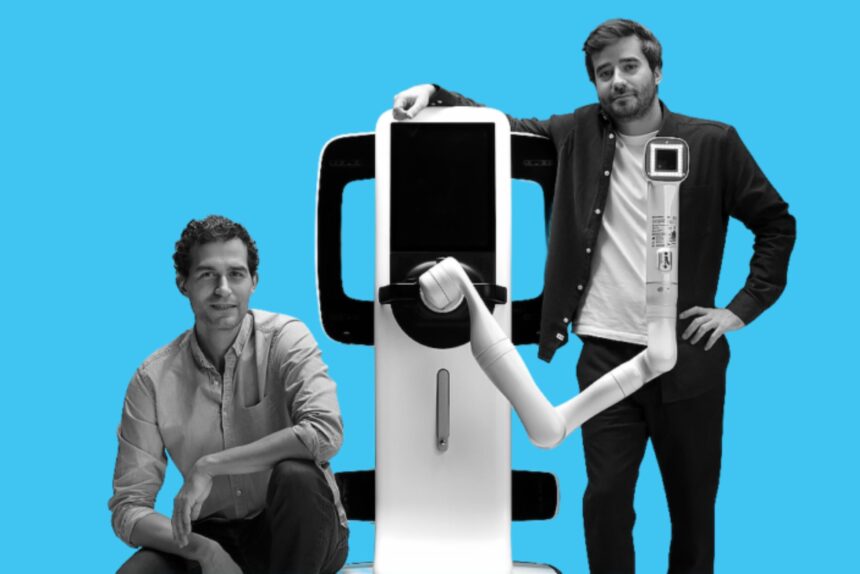
SquareMind, an artificial intelligence and robotics start-up focused on dermatology, has secured $18 million to accelerate the commercial rollout of its full-body skin imaging robot, Swan™.
The investment marks a critical step in the company’s transition from development to scale, positioning it to enter both European and US markets where access to dermatological care is increasingly constrained.
The funding comes against a backdrop of growing structural pressure on dermatology services globally. Skin screening remains the most common clinical procedure in the field, yet access delays can stretch into several months and, in some regions, up to a year.
This bottleneck is being driven by a combination of demographic and clinical factors. Ageing populations are increasing the incidence of skin conditions, while the need for continuous monitoring is rising as early detection becomes more central to treatment outcomes.
What you should know
SquareMind is positioning its Swan™ platform as a response to these constraints. The system combines robotics, high-resolution imaging, and artificial intelligence to perform full-body skin mapping within minutes, delivering dermoscopic-level detail comparable to magnified clinical examination.
The imaging process is fully automated and designed to integrate into existing clinical workflows, reducing the burden on practitioners while improving consistency in data capture.
Beyond image acquisition, the platform incorporates AI-driven software that supports clinicians in reviewing images and tracking lesions over time. Rather than replacing clinical judgement, the system is intended to augment it.
“Our technology acts as a companion: it helps reduce cognitive load, optimizes medical time, and enables comprehensive documentation, allowing physicians to focus on patient care and clinical decision-making,” explains Ali Khachlouf, co-founder and CEO of SquareMind.
A fragmented but fast-growing market
SquareMind is entering a dermatology technology market that remains fragmented, with multiple players addressing different segments of the value chain.
On the software side, companies such as SkinVision, Skin Analytics, and Legit.Health have focused on image analysis and triage, often using smartphone-captured images. While these solutions have expanded access to screening, their effectiveness can be limited by variability in image quality.
At the hardware end, established manufacturers including FotoFinder Systems and Heine Optotechnik provide high-precision imaging tools widely used in clinical settings. However, these systems are typically designed for analysing individual lesions rather than conducting full-body scans.
Between these two segments, a new class of hybrid solutions is emerging, combining imaging and analysis into integrated platforms. Yet no clear industry standard has been established, particularly in Europe, where software innovation and traditional medical device expertise continue to evolve in parallel.
With the market estimated to be worth several billion euros and expanding steadily as healthcare systems digitise care pathways, the ability to standardise both data capture and analysis is increasingly seen as a key competitive advantage.
Betting on integration and data
SquareMind’s strategy is to unify the entire dermatological imaging workflow, from automated image capture to AI-assisted analysis into a single platform.
The company argues that this integrated approach could enable the creation of longitudinal datasets capable of transforming how skin conditions are monitored and diagnosed.
The newly secured funding will be used to industrialise this model, with plans to expand commercial, engineering, and customer support teams ahead of broader deployment.
The company is targeting simultaneous expansion into Europe and the United States, two markets facing acute shortages in dermatology capacity and growing demand for early diagnostic tools.
Investor confidence in AI-led clinical transformation
For investors, SquareMind’s appeal lies not only in its technology but also in its potential to embed itself within everyday clinical practice.
The funding round was led by the Deep Tech 2030 fund, managed on behalf of the French state by Bpifrance as part of the France 2030 initiative, alongside Sonder Capital, co-founded by medical technology pioneer Fred Moll. Additional participation came from Adamed, Calm/Storm Ventures, Teampact Ventures, and a group of individual entrepreneurs.
Founded in Paris and led by Khachlouf, SquareMind is betting that the convergence of robotics, AI, and high-resolution imaging will redefine dermatological practice, particularly in screening and early detection.
As healthcare systems contend with rising demand and limited specialist capacity, experts say solutions that improve efficiency without compromising clinical quality are likely to gain traction.
Talking Points
It is notable that SquareMind is addressing a structural bottleneck in dermatology, where demand for screening continues to outpace available clinical capacity, leading to long waiting times and delayed diagnoses.
By introducing a full-body imaging robot, the company is not just improving efficiency but rethinking how skin examinations are conducted, shifting from fragmented, lesion-specific checks to comprehensive and standardised documentation.
At Techparley, we see Swan™ as a strong example of how robotics and artificial intelligence can move beyond experimentation into real clinical utility, particularly in areas where time, precision, and consistency are critical.
The ability to generate high-resolution, full-body skin maps in minutes significantly enhances a clinician’s capacity to detect changes over time, which is especially important given that most melanomas appear as new lesions.
However, adoption will depend heavily on how seamlessly the system fits into existing clinical workflows, as well as its cost-effectiveness for healthcare providers operating under budget constraints.
As SquareMind scales, there is a clear opportunity to strengthen partnerships with hospitals, dermatology clinics, and healthcare systems to accelerate deployment and build trust among practitioners.
——————-
Bookmark Techparley.com for the most insightful technology news from the African continent.
Follow us on Twitter @Techparleynews, on Facebook at Techparley Africa, on LinkedIn at Techparley Africa, or on Instagram at Techparleynews.