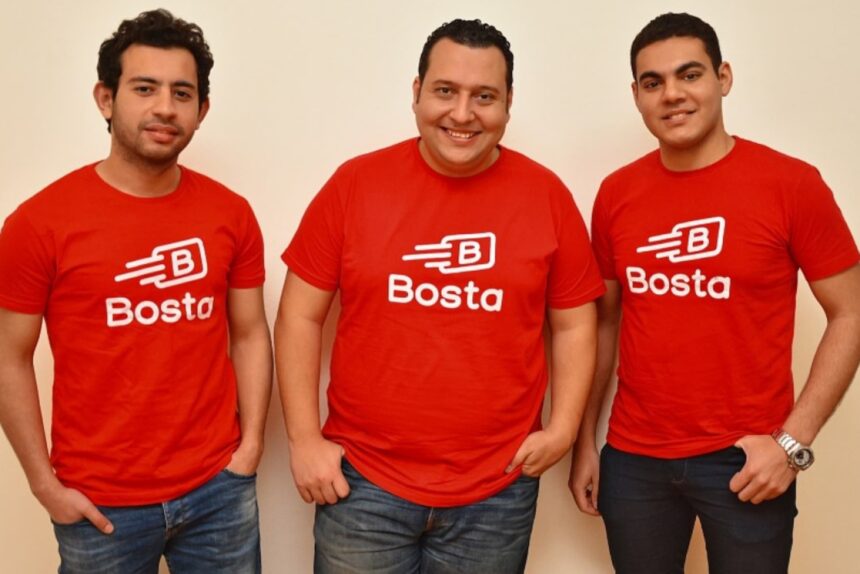
Egyptian logistics technology company Bosta has emerged at the centre of a major venture capital success story after Beltone Venture Capital and UAE-based Citadel International Holdings exited their investment in the startup with a reported 75% internal rate of return (IRR).
The transaction not only underlines Bosta’s growth as one of Egypt’s most notable e-commerce infrastructure players, but also reflects rising confidence in logistics and digital enablement startups across emerging markets.
For Bosta, the exit is a powerful market validation of its business model, technology-led operations, and long-term relevance in such a region where efficient delivery systems are becoming increasingly essential to commerce.
The deal also marks the fifth successful exit for Beltone Venture Capital since 2023, and the second completed through its joint fund with Citadel International Holdings, reinforcing investor appetite for scalable businesses in Egypt.
What to Know About This Deal
The transaction centres on the sale of Beltone Venture Capital and Citadel International Holdings’ stake in Bosta after backing the company during its growth journey.
In startup investing, such exits are often considered just as important as fundraising rounds because they show that investors can eventually realise profits from the companies they support.
According to Beltone Venture Capital, the investment generated a 75% IRR, a performance level that signals strong value creation over time. The return is especially notable in today’s environment where venture capital firms are under pressure to show disciplined investment strategies and measurable outcomes rather than simply deploying money into early-stage ventures.
Speaking on the development, Ali Mokhtar, CEO and Managing Partner of Beltone Venture Capital, said, “This successful exit demonstrates the strength of our joint fund with Citadel International Holdings and the impact of aligned capital and strategy”.
“Delivering a 75% IRR reinforces our disciplined investment approach and our commitment to enabling and empowering growth across the region,” Ali added.
The deal also reflects a broader shift in venture capital markets across the Middle East and Africa, where investors are increasingly focused on profitability, sustainability, and clear exit pathways.
What Does Bosta Offer?
Founded in 2017 by Mohamed Ezzat and Ahmed Gaber, Bosta has built its reputation as a technology-enabled logistics company serving Egypt’s fast-growing e-commerce market. The company helps merchants and online businesses manage deliveries more efficiently through digital tools, courier networks, and fulfilment support.
At its core, Bosta focuses on solving one of the biggest problems in online commerce: getting products from sellers to customers quickly, safely, and reliably. Its services include parcel shipping, courier management, and last-mile delivery, the final and often most complex stage of the delivery chain where goods reach the customer’s doorstep.
By digitising logistics processes, Bosta enables small and medium-sized businesses to compete more effectively in the e-commerce space. This makes the company not just a delivery startup, but an important infrastructure player helping merchants scale operations.
As online shopping continues to rise across emerging markets, companies like Bosta are increasingly viewed as foundational to the future of digital trade.
Who Are These Investment Companies?
Beltone Venture Capital is an investment firm focused on backing high-growth startups and innovative businesses across sectors. Since launching in 2023, it has quickly built momentum, with the Bosta transaction representing its fifth successful exit in a relatively short period.
Its partner in the joint fund, Citadel International Holdings, is a UAE-based investment group with a growing interest in startup ecosystems across the region. The company views Egypt as a strategic market with strong entrepreneurial potential and long-term growth opportunities.
On the latest exit, Fadi Dahlan, Founder of Citadel International, said, “We see Egypt as a high-potential market for startup investment, driven by strong fundamentals and entrepreneurial talent”.
“At Citadel International, we remain committed to investing in the Egyptian ecosystem. This exit reinforces our conviction in its ability to deliver sustainable growth and strong returns,” he concluded.
The collaboration between an Egyptian venture capital firm and a UAE investment group also demonstrates how cross-border partnerships are becoming more common in startup finance, particularly where Gulf capital is supporting North African innovation through locally aligned structures.
How is This Important to Africa’s Ecosystem?
Bosta’s successful investor exit carries significance far beyond Egypt. Across Africa, one of the biggest challenges facing startup ecosystems is not just raising money, but creating successful exits that return capital to investors.
Without exits, venture capital becomes difficult to sustain because funds need profitable outcomes to reinvest in new startups.
This development sends a strong message to investors that African technology companies, particularly those solving logistics, payments, and infrastructure problems, can produce real returns. It also offers encouragement to founders building businesses in sectors often overlooked in favour of trendier consumer apps.
For African markets where e-commerce is growing rapidly but logistics systems remain fragmented, Bosta’s progress serves as a practical model. It shows that solving supply chain inefficiencies can become both a commercially viable business and an investment success.
The wider effect could be substantial. Strong exits help set valuation benchmarks, attract fresh capital, and inspire early investors and founders to back the next generation of startups. In many ways, they are signs of ecosystem maturity.
Talking Points
The Bosta transaction arrives as venture capital firms across Africa and the Middle East increasingly prioritise portfolio performance over headline fundraising announcements. Investors now want startups with sustainable unit economics, clear routes to profitability, and scalable operations.
That means sectors such as logistics, fintech, and commerce infrastructure are likely to remain in focus. These industries solve urgent economic bottlenecks while benefiting from growing digital adoption.
For Africa generally, Bosta’s success is more than a single exit, it is evidence that practical innovation can attract regional capital, reward investors, and build stronger digital economies.
And as more startups emerge across Lagos, Cairo, Nairobi, Casablanca, Accra, and Cape Town, the continent may be hoping for many more Bosta-style outcomes in the years ahead.
_____________________
Bookmark Techparley.com for the most insightful technology news from the African continent.
Follow us on X/Twitter @Techparleynews, on Facebook at Techparley Africa, on LinkedIn at Techparley Africa, or on Instagram at Techparleynews