



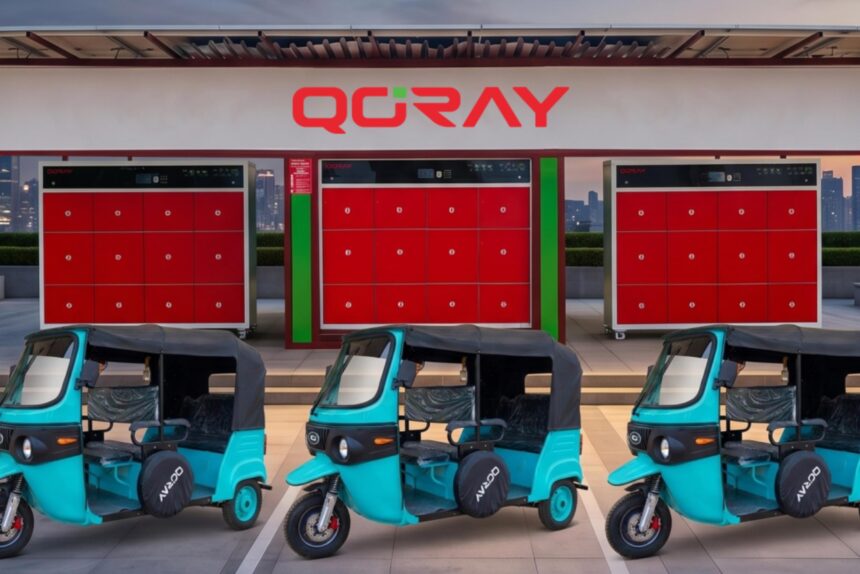
Qoray Mobility & Energies Limited has introduced a Dealer-Owned, Dealer-Operated (DODO) model aimed at accelerating the adoption of electric mobility in Nigeria while creating new pathways for local entrepreneurs to build infrastructure-backed transport businesses.
The initiative reflects a growing shift towards decentralised mobility systems in Africa, where rising urban populations and high fuel costs are driving demand for more efficient and sustainable last-mile transport solutions.
Unlike traditional dealership systems that focus primarily on vehicle distribution, Qoray’s DODO model is structured as a full operational ecosystem.
“Our vision goes beyond deploying electric vehicles,” said Olabanjo Alimi, Founder and CEO of Qoray Mobility & Energies Limited. “We are building a decentralised last-mile mobility ecosystem that empowers local operators, expands access to clean transportation, creates green jobs, and drives sustainable economic participation across communities.”
What you need to know
Under the framework, independent dealers own and manage electric tricycle fleets within designated territories while leveraging Qoray’s integrated platform, including battery-swapping infrastructure, operational systems, and technology support.
This model is designed to create recurring revenue streams for operators, positioning mobility not just as a transport service but as a long-term infrastructure-driven business.
To participate, dealers are required to make an upfront equity contribution of approximately ₦50 million, granting access to an asset-backed ecosystem valued at around ₦177 million.
The remaining financing is supported through a bank-backed facility structured over two years, with repayments tied to daily operational performance.
This blended financing approach aims to reduce the capital burden on entrepreneurs while enabling faster deployment of electric fleets and supporting infrastructure.
Driving economic and environmental impact
Qoray’s electric tricycles are positioned as a cost-efficient alternative to petrol-powered vehicles, offering reduced fuel dependency and lower operating costs for riders and fleet operators.
This is particularly relevant in Nigeria, where fluctuating fuel prices continue to affect transport economics and urban mobility affordability.
A key component of Qoray’s strategy is local vehicle assembly, aimed at strengthening domestic industrial capacity and developing technical expertise within Nigeria’s emerging electric mobility value chain.
By assembling vehicles locally, the company seeks to create specialised jobs, support skills development, and reduce reliance on imported mobility solutions.
This aligns with broader national efforts to promote local manufacturing and deepen participation in global clean energy transitions.
Decentralisation as a growth strategy
The DODO model is built on the principle of decentralised ownership, enabling economic value to be retained within local communities rather than concentrated among a few operators.
By distributing fleet ownership across multiple dealers, Qoray aims to accelerate grassroots adoption of electric mobility while fostering inclusive economic growth.
The approach also reflects a wider trend across Africa, where decentralised infrastructure models are gaining traction as a way to address gaps in transport, energy, and logistics systems.
As African cities continue to expand, the demand for efficient last-mile transport is expected to increase significantly. Electric mobility is emerging as a key solution, offering both environmental benefits and improved cost efficiency for operators.
Positioning for Africa’s urban future
By combining financing, infrastructure, and local entrepreneurship, Qoray Mobility & Energies Limited is positioning itself at the intersection of clean transport and inclusive economic development.
The success of the DODO model will depend on adoption rates, financing accessibility, and the reliability of supporting infrastructure such as battery-swapping networks.
However, if effectively executed, experts say the model could provide a blueprint for scaling electric mobility across other African markets, where similar challenges around cost, infrastructure, and access persist.
For now, Qoray’s latest move underscores a broader shift in how mobility solutions are being designed, moving away from centralised systems towards decentralised, community-driven ecosystems capable of delivering both economic and environmental value at scale.
Talking Points
At Techparley, we see Qoray Mobility & Energies Limited’s DODO model as a significant shift in how electric mobility is being structured in Nigeria, moving away from conventional vehicle sales towards decentralised, infrastructure-backed entrepreneurship.
It is particularly noteworthy that the model combines fleet ownership with operational support systems such as battery swapping and integrated mobility platforms, effectively turning transport operators into asset-owning business operators rather than informal drivers.
The upfront equity requirement, paired with a bank-backed financing structure, introduces a hybrid model that lowers traditional barriers to entry while still ensuring long-term sustainability and asset-backed growth.
We see this as part of a broader trend in African mobility, where infrastructure and energy systems are increasingly being bundled with mobility solutions to improve scalability and operational efficiency.
The focus on local assembly is also significant, as it strengthens domestic manufacturing capacity while contributing to skills development within Nigeria’s emerging electric vehicle ecosystem.
As electric mobility continues to expand across Africa, we see Qoray’s approach as a potential blueprint for combining clean transport, decentralised ownership, and inclusive economic participation at scale.
——————-
Bookmark Techparley.com for the most insightful technology news from the African continent.
Follow us on Twitter @Techparleynews, on Facebook at Techparley Africa, on LinkedIn at Techparley Africa, or on Instagram at Techparleynews.