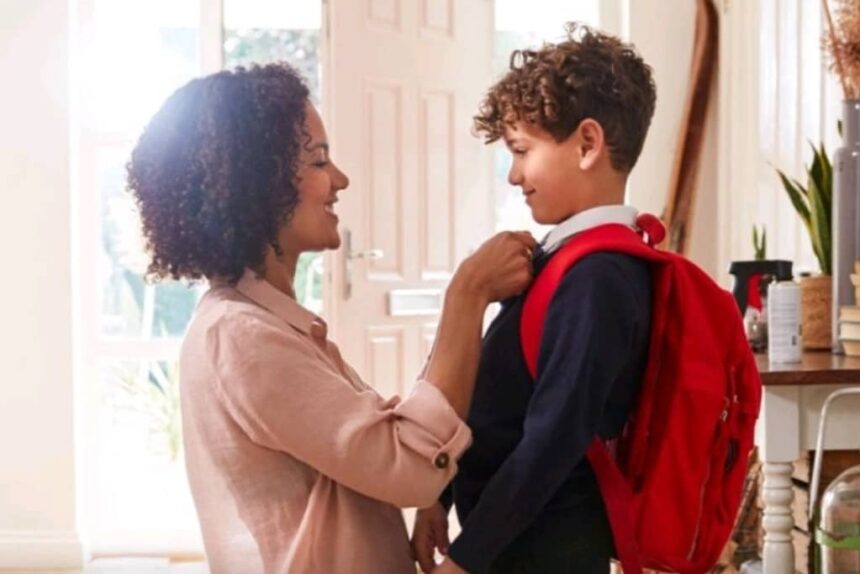
School uniforms are once again at the centre of a growing debate over whether the long-standing tradition remains relevant in modern education, after BBC News reported that secondary schools in England will, from September, be limited to three items carrying a school logo, alongside a tie.
While the measure is designed to reduce the financial burden of branded uniforms on families, the discussion has reignited a broader question, should children continue to wear compulsory school uniforms at all?
Reactions to the BBC’s LinkedIn post have exposed sharply contrasting views. Critics describe uniforms as outdated and restrictive, while supporters argue that they promote equality, reduce peer pressure and strengthen school identity.
One commenter asked why England should continue “living in the past century”, while another argued that uniforms “bring children together through a shared identity”.
Uniforms, individuality and the question of freedom
At the heart of the opposition to school uniforms is the argument that children should have greater freedom to express themselves through their clothing.
One commenter, Moona D., questioned why schools should continue enforcing what was described as an “old tradition”, arguing that children should instead be allowed to wear clean, weather-appropriate clothing.
The concern extends beyond fashion and self-expression to practicality, particularly for younger pupils who may participate in outdoor activities.
Moona said uniforms could hinder children from “moving freely or climbing trees and doing many other outdoor activities”.
Others challenged the idea that uniforms automatically create belonging, with Rhiannon M. asking whether they create genuine unity or merely “an illusion of unity”.
From this perspective, allowing children to choose their clothes could teach responsibility, individuality and respect for diversity rather than conformity.
Supporters say uniforms can reduce visible inequality
Arguments supporting school uniforms, however, holds ground that removing them could expose children to greater socioeconomic pressure rather than liberate them from it.
Kelly Arnott said uniforms can bring pupils together through “a shared identity” while preventing differences in family income from becoming immediately visible.
Clare Porter similarly argued that uniforms can “level the income gap”, pointing to non-uniform days as an example of how clothing can make economic differences more obvious.
Jacqui Rose offered perhaps the most vivid illustration, describing children in a low-income community who attend school in carefully maintained uniforms despite their families living in severe poverty.
According to her, it can be difficult to tell whether a child comes from “a shack or a walled house” because the pupils appear equally smart and prepared. For supporters, that visual equality can protect dignity while keeping attention on education.
Peer pressure, bullying and the hidden cost of choice
Another major argument in favour of uniforms is that eliminating them could simply replace one form of pressure with another.
David Pierce identified bullying, clothing-based peer pressure, inequality and distraction as reasons for retaining uniforms, arguing that matching clothing can help students look equal regardless of their family’s financial circumstances.
A separate commenter noted that some American parents would actually welcome uniforms because children can face intense pressure to own fashionable trainers, designer clothing and other expensive items to fit in with their peers.
Martin H., despite strongly opposing uniforms himself, acknowledged that parents “have to buy clothing anyway”, suggesting that the real issue may partly be whether families spend money under school rules or under social pressure.
The debate therefore raises a difficult question, does clothing freedom reduce pressure, or merely change the source and form of that pressure?
Tradition, school identity and the debate over the tie
Beyond the broader arguments about equality and freedom lies a smaller but revealing dispute over the role of traditional uniform items, particularly the school tie.
For supporters, distinctive uniforms, colours and logos can reinforce institutional identity and create a sense of belonging among pupils.
Heather Quigley explained that the tie can function as part of a secondary school’s identity and is sometimes reserved for formal occasions or photographs. Critics, however, see such traditions as unnecessary symbols of conformity.
When Julie Shelton asked, “What is the point of the tie?”, Martin H. responded that there was “no point”, describing it as “an utterly ridiculous and pointless item”.
His criticism reflects a wider concern that schools may preserve certain uniform requirements because they are traditional rather than because they serve a clear educational purpose.
Ultimately, the debate is less about a single piece of clothing than about what modern schools should value, tradition, identity, equality, practicality or individual freedom.
Talking Points
The debate exposes a familiar tension, where we sometimes mistake tradition for effectiveness and freedom for progress.
School uniforms are neither inherently oppressive nor automatically equalising, their value depends on what problem they are designed to solve.
In Nigeria for instance, where socioeconomic disparities are far more pronounced, completely abandoning uniforms could intensify visible class distinctions, designer-brand competition and bullying.
But defending every uniform requirement simply because “that is how it has always been” is equally indefensible. Yes, tradition deserves respect, but not immunity from scrutiny. A ₦20,000 branded school item does not improve a child’s education, discipline or character.
The sensible question is therefore not uniform or no uniform, but what is necessary, affordable and educationally useful?
Schools should retain simple, affordable uniforms where they promote identity and reduce socioeconomic pressure, while eliminating excessive branding, uncomfortable designs and pointless requirements.
________________________
Bookmark Techparley.com for the most insightful technology news from the African continent.
Follow us on X/Twitter @Techparleynews, on Facebook at Techparley Africa, on LinkedIn at Techparley Africa, or on Instagram at Techparleynews