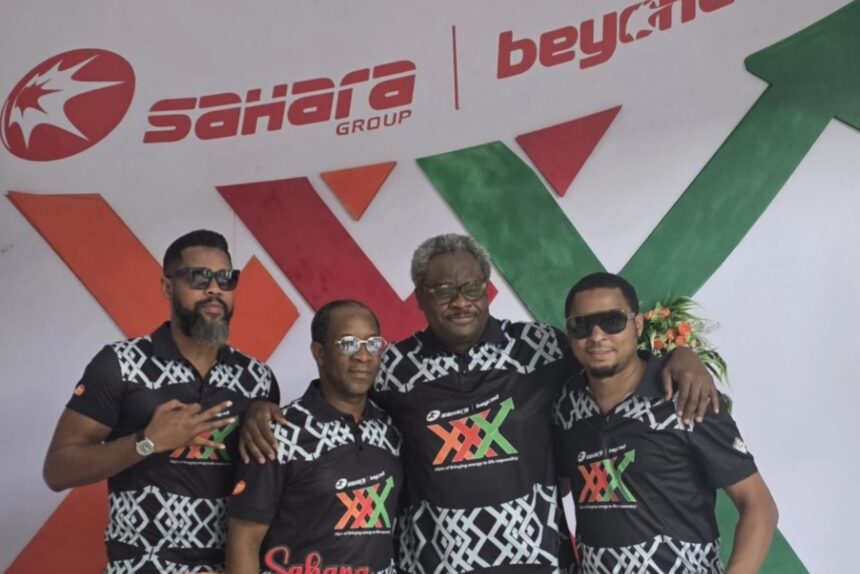
Sahara Group has marked three decades of operations with a renewed call for discipline, innovation, stronger governance and sustained investment in people as the energy conglomerate prepares for its next phase of growth.
Group Managing Director, Dr. Kola Adesina, made the call while commemorating the company’s 30th anniversary, stressing that longevity alone does not guarantee continued success in a rapidly changing business environment.
According to Adesina, Sahara’s journey from an entrepreneurial venture founded in 1995 to a major international energy group has been shaped by its ability to adapt to changing markets, industries and technology.
“30 years is a remarkable milestone, but for an institution, longevity is only meaningful when it is matched by relevance, resilience, and continued value creation,” he said.
He further urged the organisation to build on its achievements while preparing responsibly for the challenges and opportunities ahead.
What to Know About Sahara Group
Founded in 1995, Sahara Group has evolved from an organisation initially focused on oil trading into a diversified international energy and infrastructure conglomerate.
The company currently operates across more than 42 countries in Africa, Asia, Europe and the Middle East, with interests spanning power generation and distribution, as well as upstream, midstream and downstream energy activities.
With more than 5,000 employees from different nationalities, Sahara describes itself as a diverse organisation focused on providing energy solutions while supporting environmental, social and governance objectives.
Its expansion has also increasingly incorporated technology, artificial intelligence and human-capital development. The company says these areas are central to its efforts to expand sustainably and remain competitive.
Through the Sahara Group Foundation, it also pursues social-impact initiatives aimed at empowering businesses and communities through its EXTRAPRENEURSHIP model.
Three Decades of Adaptation and Resilience
Reflecting on Sahara’s 30-year journey, Adesina acknowledged that the company’s growth has taken place against a backdrop of significant changes in the global business and energy environment.
Markets have shifted, industries have evolved and technological advancement has transformed how organisations operate and compete. Despite these changes, he said Sahara has continued to adjust its strategies and operations to remain relevant.
“Through it all, Sahara has continued to adapt, learn, and move forward,” Adesina said, describing the company’s resilience as something worthy of celebration.
His assessment suggests that Sahara’s longevity has been driven not simply by the passage of time but by its willingness to learn from changing circumstances.
The company’s transformation from an oil-trading business into a broader energy conglomerate illustrates this evolution and reflects its ambition to participate across several segments of the energy value chain.
Adesina Sets Priorities for Sahara’s Next Chapter
While celebrating the company’s achievements, Adesina made it clear that Sahara’s 30th anniversary should not become an excuse for complacency. Instead, he believes the milestone should serve as a moment to consider what must be done to secure the organisation’s future.
He identified discipline, innovation, governance and investment in people as essential priorities for the next phase of the company’s development.
“The next chapter will require courage, alongside greater discipline, innovation, governance, and investment in people,” he stated.
Greater discipline would require stronger accountability and operational standards, while innovation would help Sahara respond to technological and market changes.
Strong governance would provide effective systems for responsible decision-making, risk management and accountability.
Investment in people, meanwhile, would help the company develop the skills and leadership needed to compete in an increasingly complex global energy industry.
Building an Institution for Future Generations
Beyond immediate business performance, Adesina’s message places significant emphasis on building an organisation capable of surviving and creating value long into the future.
He argued that Sahara’s responsibility is not merely to celebrate what has already been achieved but to protect and strengthen the institution for generations yet to come.
“Our responsibility now is to build an institution worthy of the next XXX years,” he said.
The statement reflects a long-term approach to corporate leadership in which the success of an organisation is measured not only by its present size or financial performance but also by its ability to remain resilient and relevant after its current leaders have moved on.
Adesina also expressed appreciation to Sahara’s employees, partners and stakeholders for contributing to the company’s three-decade journey.
“The achievement is significant; and the responsibility for the future is even greater,” he concluded.
Adesina also captures the central message of the anniversary, as it celebrates the past while accepting the greater responsibility of building a stronger future.
___________________________
Bookmark https://techparley.com/ for the most insightful technology news from the African continent.
Follow us on X/Twitter @Techparleynews, on Facebook at Techparley Africa, on LinkedIn at Techparley Africa, or on Instagram at Techparleynews