



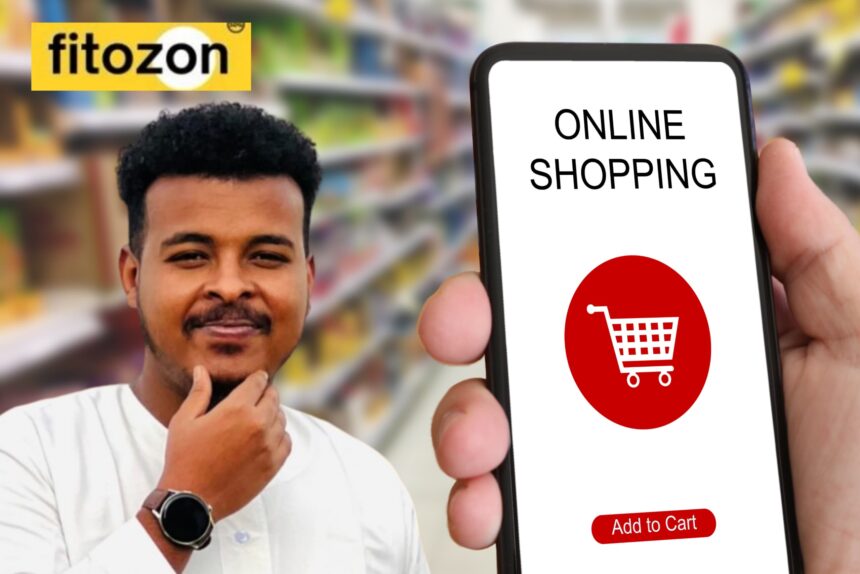
Sudanese startup, Fitozon is steadily rewriting the rules of access to global commerce in a country where international online shopping has long been out of reach for many consumers.
Founded in 2023 by entrepreneur Ibrahim Algali, the cross-border e-commerce facilitation platform has emerged as a trusted bridge between Sudanese shoppers and major global online marketplaces such as Amazon, AliExpress, Noon, and Shein.
By allowing customers to shop from these international platforms while paying in local currency, Fitozon is tackling one of Sudan’s most persistent consumer challenges, the inability to access foreign payment systems and global retail platforms.
In just a short period, the startup has processed more than 40,000 orders, all while remaining fully self-funded. Its rise highlights both the scale of unmet demand in Sudan and the growing opportunity for technology-driven solutions that solve everyday barriers.
“In a market where most people have no access to international payment methods or foreign currency, we act as the trusted bridge between global e-commerce and the Sudanese consumer,” Algali said.
The Pain Point in Focus
For years, Sudanese consumers have watched the growth of international e-commerce from the sidelines. While global shoppers increasingly enjoy the convenience of ordering goods online from platforms like Amazon and AliExpress, many Sudanese citizens have lacked the practical means to participate in that digital economy.
According to Algali, the barriers are structural and longstanding. Sudan’s history of international sanctions, limited banking infrastructure, and restricted access to foreign currency have combined to create a difficult environment for cross-border commerce.
“Sudanese consumers had growing awareness of global platforms but no practical way to access them. Sudan is one of Africa’s most underserved e-commerce markets,” Algali explained.
The founder noted that many consumers cannot hold foreign currency accounts or use internationally accepted credit cards, making direct purchases from global marketplaces nearly impossible.
As a result, a large population with clear demand for quality products has remained disconnected from international online retail.
What is Fitozon and What It Does
Fitozon was built to close a gap, that’s, rather than expecting customers to navigate complicated payment systems, shipping processes, or customs regulations, the startup manages the entire transaction journey on behalf of the buyer.
Through its platform, Sudanese consumers can select products from leading international websites. Fitozon then takes responsibility for purchasing the goods, processing international payments, arranging shipping, handling customs clearance, and completing last-mile delivery within Sudan.
This model effectively removes the technical, financial, and logistical barriers that once blocked consumers from accessing global goods. Customers simply pay in Sudanese pounds, while Fitozon handles the international complexities behind the scenes.
By simplifying the process, the company has turned global shopping into a practical option for everyday Sudanese households seeking electronics, fashion, household items, beauty products, and other consumer goods.
Why This Matters
Fitozon’s model is important not only as a commercial success story, but also as an example of how startups can unlock access in underserved markets.
Across many developing economies, the challenge is not always a lack of demand, but a lack of systems that connect consumers to supply. Fitozon demonstrates how local innovation can bridge that divide by adapting global commerce to local realities.
Its presence gives Sudanese consumers more choice, potentially better pricing, and access to products that may not be readily available in local markets. It also introduces more people to the convenience of e-commerce, helping to nurture digital buying habits in a market where online retail remains relatively young.
At a broader level, the company’s growth reflects the increasing relevance of African startups building solutions around infrastructure gaps rather than waiting for those systems to mature.
Fitozon’s Milestones So Far
Despite launching only in 2023 and operating without outside investment, Fitozon has already recorded strong traction. The company recently surpassed 40,000 processed orders, a milestone that signals both scale and customer trust.
Even more striking is that the growth has reportedly been fueled largely by word-of-mouth referrals and organic social media engagement rather than expensive marketing campaigns.
“We have grown organically without external investment, which we see as a validation of the model’s unit economics,” Algali said.
He added that repeat customers have played a central role in expansion.
“Uptake has been strong and consistent since launch. We have processed over 40,000 orders to date, driven almost entirely by word of mouth and organic social media growth, including a TikTok following of over 42,000. Customer retention and repeat orders have been key drivers of our growth.”
Financially, the startup says it generated approximately US$122,000 in revenue over the past year, while maintaining operational sustainability as a bootstrapped company.
Challenges and Ambitious Plans for the Future
Building an e-commerce logistics business in Sudan has not been easy. Algali pointed to multiple operational difficulties, particularly around delivery infrastructure and macroeconomic instability.
“Sudan’s logistics infrastructure is underdeveloped, which makes last-mile delivery unreliable in many areas,” the founder said.
He also highlighted the challenge of managing pricing in a volatile currency environment.
“Currency volatility adds complexity to pricing and cost management, as we operate in Sudanese pounds while absorbing international costs.”
In addition to logistics and currency issues, the startup has had to build consumer trust in a market with limited e-commerce experience, while also creating its own systems for customs and cross-border fulfillment.
“Finally, navigating international shipping and customs with no established framework for cross-border consumer e-commerce in Sudan meant we had to build our own operational processes largely from scratch,” Algali added.
Yet despite those obstacles, the company is already looking beyond cross-border commerce. Its next major step is the creation of a domestic marketplace where Sudanese merchants, brands, and individuals can list and sell goods locally.
“Our next major milestone is the launch of a full local marketplace platform, enabling Sudanese merchants, brands, and individual sellers to list and sell products domestically. This will transform Fitozon from a cross-border facilitator into a comprehensive e-commerce ecosystem for Sudan,” said Algali.
Talking Points
Fitozon deserves credit for identifying a real market failure and building a practical solution where formal systems have fallen short.
Enabling Sudanese consumers to access global e-commerce platforms despite payment restrictions, weak banking infrastructure, and logistics gaps shows sharp market insight and operational courage.
Processing over 40,000 orders without external funding is impressive and suggests genuine demand. However, the model’s long-term strength remains uncertain.
A service built heavily around acting as an intermediary can scale revenue, but it can also face thin margins, high operational complexity, customer service pressure, and heavy exposure to currency volatility.
If international payment access improves or global platforms localize operations, Fitozon’s core value proposition could weaken unless it evolves quickly. Its dependence on trust also means one wave of delays, pricing complaints, or customs disruptions could damage reputation fast.
The planned local marketplace is strategically smart, but marketplace businesses are far harder to build than brokerage services because they require seller quality control, liquidity, and stronger infrastructure.
Overall, Fitozon is solving a meaningful problem today, especially for Sudanese in Sudan, but its future depends on whether it can transition from workaround provider to durable ecosystem builder.
_____________________
Bookmark Techparley.com for the most insightful technology news from the African continent.
Follow us on X/Twitter @Techparleynews, on Facebook at Techparley Africa, on LinkedIn at Techparley Africa, or on Instagram at Techparleynews