



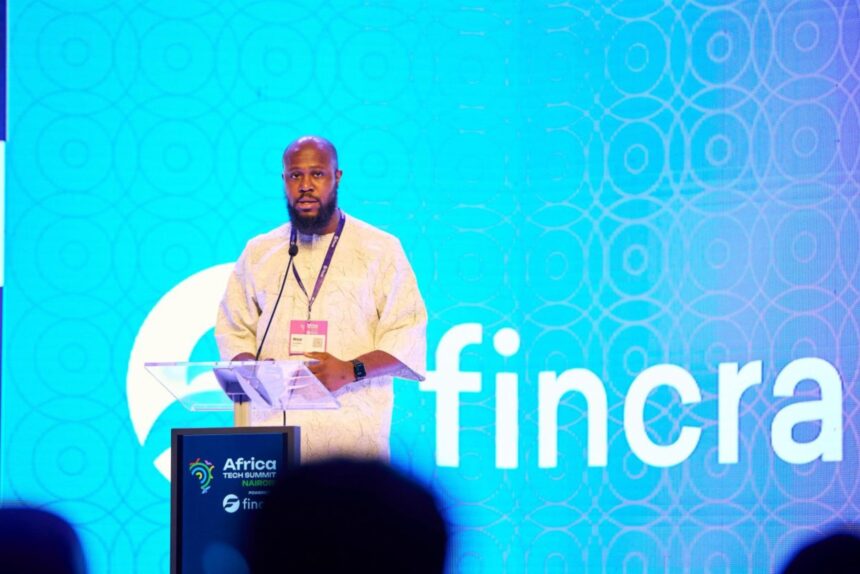
Nigerian payments infrastructure provider, Fincra, has secured a Payment Service Provider Licence (Enhanced Category) from the Bank of Ghana, marking a step in its expansion across West Africa’s financial ecosystem.
The licence enables Fincra to connect directly to Ghana’s payment systems, collect local payments, process transactions within the country, and receive funds in Ghanaian cedis.
The approval effectively positions the company as a regulated gateway into one of the region’s most active digital payment markets.
It comes just two months after Fincra obtained a similar Payment Service Provider licence in Canada, underscoring its growing regulatory footprint across multiple jurisdictions.
Ghana’s fast-growing digital payments market
Ghana has emerged as one of Africa’s leading mobile money markets, with transaction volumes reaching GH¢1.912 trillion (about $170 billion) in 2023.
The country also plays a key role in regional commerce, with informal cross-border trade between Ghana and neighbouring countries valued at GH¢7.4 billion ($661 million) in Q4 2024, according to the Ghana Statistical Service.
For fintech operators, the market represents both scale and fragmentation, high transaction activity, but limited integration across payment systems.
Fincra says its licensing approval will help bridge that gap.
Building regulated rails for cross-border payments
Founded in 2021 by Wole Ayodele and Gideon Orovwiroro, Fincra now operates across more than 20 markets in Africa and powers payment flows spanning Africa, Europe, and North America.
According to Ayodele, the approval reflects a broader shift in African fintech towards regulated infrastructure rather than experimental expansion.
“Getting the green light from the Bank of Ghana means we can finally give our merchants a direct, high-speed rail into this market. Whether a business needs to collect mobile money locally, or a global platform needs to drop remittances directly into Ghanaian bank accounts, we are removing the friction,” Ayodele added.
With the new licence, Fincra merchants will be able to accept payments through major Ghanaian mobile money networks including MTN MoMo, Telecel, and AirtelTigo, as well as through local bank transfers.
Unlocking local and cross-border payment flows
The company also said the licence enables global remittance providers and payroll platforms to send money directly into Ghanaian bank accounts and mobile wallets, reducing reliance on intermediary systems.
In addition, Fincra’s infrastructure supports business-to-business (B2B) payments by allowing companies to open local cedi-denominated collection accounts and automate reconciliation of incoming funds.
All of these services can be accessed through a single Application Programming Interface (API), removing the need for multiple local integrations.
Rising competition in regulated payment infrastructure
Fincra joins a small but growing group of Nigerian fintech companies that have secured payment licences in Ghana, including Flutterwave and Paystack. The trend reflects intensifying competition among African fintechs to build compliant, country-specific payment infrastructure.
Rather than focusing solely on cross-border reach, companies are increasingly prioritising regulatory approval in individual markets as the foundation for long-term scale.
The company’s strategy is anchored on the belief that the next phase of African fintech growth will be driven by interoperable, regulated infrastructure capable of supporting seamless cross-border commerce.
As Ayodele puts it, the focus is shifting from building access to building reliability at scale.
With Ghana now added to its regulatory portfolio, Fincra is strengthening its position in the race to define how money moves across Africa’s increasingly connected digital economy.
Talking Points
It is notable that Fincra has secured an Enhanced Payment Service Provider licence in Ghana, a move that reinforces its long-term strategy of building regulated payment infrastructure across key African markets rather than operating as a purely cross-border fintech layer.
This approval positions Ghana not just as another expansion market, but as a critical gateway into West Africa’s fast-growing but fragmented digital payments ecosystem, where mobile money and bank transfers dominate everyday transactions.
At Techparley, we see this as part of a broader shift in African fintech, where regulatory licensing is becoming just as important as product innovation in determining which companies can scale sustainably across borders.
The ability to process local transactions in cedis, integrate with mobile money platforms like MTN MoMo, and support direct bank settlements significantly reduces friction for merchants and global platforms operating in Ghana.
As Fincra expands its regulatory footprint across multiple jurisdictions, there is a clear opportunity to define the next phase of African payments, one driven not just by access, but by fully regulated, interoperable financial rails that make cross-border transactions feel truly local.
——————-
Bookmark Techparley.com for the most insightful technology news from the African continent.
Follow us on Twitter @Techparleynews, on Facebook at Techparley Africa, on LinkedIn at Techparley Africa, or on Instagram at Techparleynews.