



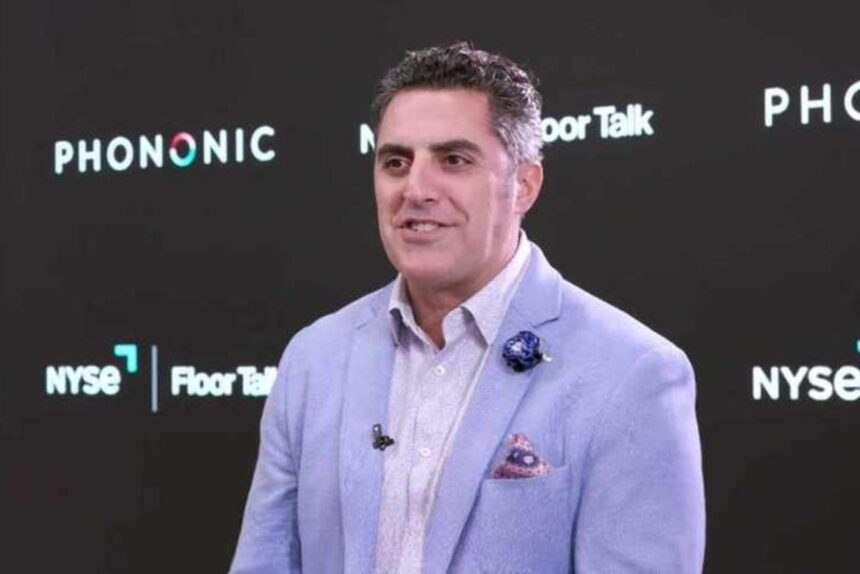
Phononic is now exploring a potential sale that could value the North Carolina-based startup at around $1.5 billion, with some offers reportedly exceeding $2 billion.
The company has been working with investment bank Lazard since early 2026 to evaluate its strategic options, which may also include raising fresh capital.
Founded in 2008 by chief executive Tony Atti, Phononic uses thermoelectric technology, semiconductor-based cooling chips that sit closer to heat sources and respond in milliseconds.
This allows for more precise, component-level temperature control, particularly important in AI systems where even small fluctuations can affect performance.
Phononic claims its technology can improve sustained compute performance by up to 40 per cent, while reducing energy inefficiencies and extending hardware lifespan. The company also says customers can achieve a return on investment within months through improved system utilisation.
From Static Cooling to Dynamic Systems
Central to Phononic’s offering is its “Thermal Fabric”, a software-driven system that monitors workloads and adjusts cooling in real time.
This represents a shift away from static infrastructure towards adaptive systems that respond dynamically to changing computational demands.
The approach aligns with broader trends in AI infrastructure, where optimisation increasingly depends on real-time data and automated control systems.
Phononic has also expanded its product suite to support emerging technologies, including next-generation GPU memory such as HBM4, as well as high-speed optical networking and co-packaged optics, key components in advanced data centre architectures.
Investor Interest Follows Infrastructure Demand
The company has raised more than $230 million to date, with backing from investors including Goldman Sachs Asset Management, Venrock and GGV Capital. Its last reported valuation in 2022 stood at approximately $630 million.
A potential deal valuing the company at over $1.5 billion would represent a significant increase, underscoring the growing importance of thermal management in the AI value chain.
Recent acquisition activity across the sector suggests a similar trend, with companies focused on cooling and power efficiency attracting heightened interest from strategic buyers seeking to strengthen their AI infrastructure capabilities.
A Strategic Inflection Point
Phononic’s decision to explore a sale comes at a time when demand for AI infrastructure is accelerating globally. Hyperscale data centre operators are under pressure to maximise performance while managing escalating energy costs and hardware constraints.
Cooling technologies that can improve efficiency and extend system life are therefore becoming integral to long-term infrastructure strategy.
The company’s refrigerant-free design and software-controlled systems position it as a potential acquisition target for larger players looking to integrate advanced thermal management into their platforms.
In AI systems, where performance is closely tied to hardware efficiency, thermal constraints can directly limit scalability. Solutions that address these challenges are likely to play an increasingly central role in shaping the next phase of technological development.
For Phononic, the next move will determine how it capitalises on this moment.
Talking Points
It is striking that as AI systems become more powerful, the constraint is no longer just compute capacity but the ability to manage heat effectively.
Phononic’s rise highlights a broader shift in the AI ecosystem, where infrastructure components once considered secondary are now becoming central to performance and efficiency.
At Techparley, we see this as a rebalancing of the AI value chain, where physical infrastructure is gaining importance alongside software and models.
The company’s semiconductor-based cooling approach is particularly compelling, as it moves thermal management closer to the chip level, enabling faster and more precise control. This positions Phononic not just as a cooling provider, but as a performance enabler for next-generation AI systems.
The growing interest from investors and potential buyers suggests that cooling is increasingly being viewed as a strategic asset rather than an operational necessity.
As AI workloads continue to expand, the ability to optimise thermal performance could become a key differentiator for hyperscalers and enterprise operators alike.
If this trend holds, companies like Phononic may play a defining role in shaping the next phase of AI infrastructure development.
——————-
Bookmark Techparley.com for the most insightful technology news from the African continent.
Follow us on Twitter @Techparleynews, on Facebook at Techparley Africa, on LinkedIn at Techparley Africa, or on Instagram at Techparleynews.