



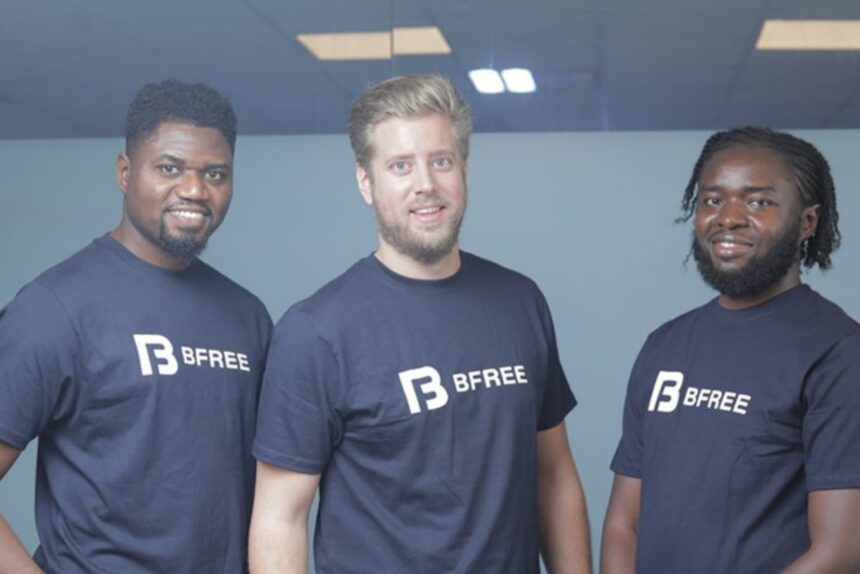
Nigeria’s BFREE, a pan-African distressed retail and SME credit investor, secured a new growth funding round aimed at significantly expanding its operations across the continent. The startup said the fresh capital will strengthen its ability to purchase larger bad debt portfolios, deepen long-term partnerships with financial institutions, and enter new African markets.
Although the exact size of the investment was not disclosed, the round attracted leading global and regional investors, showcasing growing confidence in BFREE’s business model and in Africa’s emerging credit recovery industry.
The funding round was led by AfricInvest through its Financial Inclusion Vehicle (FIVE), an evergreen investment fund focused on expanding financial inclusion in Africa. It also included Algebra Ventures, making its first-ever investment in a Nigeria-headquartered company, alongside returning backers Capria Ventures, VestedWorld, Axian CVC, Angaza Capital, 4Di Capital, and DotExe Ventures.
This latest raise comes at the time when Africa’s digital lending market is expanding rapidly, but many lenders continue to struggle with rising defaults, unpaid consumer loans, and weak recovery systems.
BFREE is positioning itself as a strategic solution to that challenge by combining capital, artificial intelligence, and borrower data to create a more efficient debt resolution system.
What is BFREE and What Does It Do?
Founded in 2020 by Julian Flosbach, Chukwudi Enyi, and Moses Nmor, BFREE is a Nigerian fintech startup focused on distressed credit investing and debt recovery across Africa.
In practical terms, the company purchases unpaid or non-performing loans from banks, microfinance institutions, fintech lenders, and other credit providers, then works to recover those debts through technology-enabled systems and borrower engagement strategies.
Non-performing loans are loans that borrowers have failed to repay for a long period, making them difficult for lenders to recover. These debts often weigh heavily on lenders’ balance sheets and reduce their ability to issue new loans.
BFREE steps in by buying these distressed assets and managing the recovery process more efficiently. Beyond one-time portfolio purchases, the company also structures “forward flow” agreements with lenders.
This means BFREE commits to regularly buying newly defaulted loans over time, giving financial institutions a dependable and long-term solution for handling bad debts.
How is BFREE Unique?
BFREE’s uniqueness lies in its use of artificial intelligence and one of the continent’s largest private distressed borrower datasets. According to the company, it has completed more than 35 transactions and built a portfolio covering over 11 million borrower accounts.
This vast pool of data gives BFREE a strong edge in understanding borrower behaviour, predicting repayment patterns, and pricing loan portfolios more accurately than traditional debt collectors.
Unlike conventional collection agencies that often rely on aggressive tactics, BFREE says its model prioritises transparency and realistic repayment plans.
The company believes “responsible resolution produces stronger outcomes for all parties over time.”
Its AI-enabled platform also helps automate communication, segment borrowers, personalise repayment options, and improve operational efficiency, making collections faster, smarter, and more humane.
Why is This Funding Important?
The new capital injection is significant because it gives BFREE the financial muscle to scale aggressively at a time when Africa’s lending sector is growing quickly.
With more funding, the company can now pursue larger portfolio acquisitions, meaning it can buy bigger volumes of bad debt from banks and fintechs. It can also move faster in closing deals, expand into more countries, and partner with a wider range of institutional lenders.
Julian Flosbach, Chief Executive Officer of BFREE, said the opportunity in the market has long been bigger than the systems available to address it.
“The market opportunity is significantly larger than the infrastructure historically available to address it. This round puts us in a position to pursue substantially larger portfolio acquisitions, engage a broader range of institutional partners, and do so with the speed and certainty of execution that serious counterparties demand,” he said.
The statement underscores how serious investors now view the debt recovery market in Africa, not as a side industry, but as a core part of the continent’s financial services ecosystem.
How Does the Startup Make Money?
BFREE’s revenue model is straightforward but sophisticated. The company buys portfolios of unpaid loans at discounted prices, often below their original value, because lenders would rather recover something immediately than continue chasing difficult debts.
BFREE then uses data analytics, borrower engagement tools, and structured repayment plans to recover more than it paid for those debts. The difference between the purchase price and recovered amount forms a key source of profit.
It also earns strategic value through recurring forward flow partnerships, where lenders continuously transfer new distressed accounts to BFREE under pre-agreed terms.
This model creates predictable deal flow while helping lenders clean their books and focus on new lending opportunities.
Why This Matters for Africa’s Financial Sector
The rise of digital lending across Africa has made credit more accessible to millions of people and small businesses. However, it has also led to a surge in unpaid small-ticket loans, fraud risks, and weak collection systems.
Without effective recovery mechanisms, lenders face higher losses, tighter credit standards, and reduced willingness to lend, especially to low-income borrowers and SMEs.
Patrick Herrmann, partner at AfricInvest, said BFREE is solving a critical missing link in Africa’s lending value chain.
“BFREE’s approach to credit management, based on a unique set of proprietary data and a technology-enabled collection platform, closes an essential gap in the digital lending value chain,” he said.
He added that as high-speed digital lending becomes common across markets, banks and fintechs increasingly need reliable partners to manage non-performing loans.
Talking Points
BFREE represents a more mature and arguably more necessary phase of African fintech, one focused not on flashy growth metrics, but on fixing the messy consequences of reckless lending. Its model addresses a real structural gap, many lenders across Africa rushed into digital credit without building strong risk controls or recovery systems.
In that sense, BFREE is solving a problem others helped create. However, its success also depends on a troubling reality, rising borrower distress, weak financial literacy, aggressive loan issuance, and fragile household incomes. That means the bigger BFREE grows, the more it reflects dysfunction in the credit ecosystem.
The company’s promise of AI-driven, ethical collections sounds progressive, but execution will matter more than branding; debt recovery in emerging markets can quickly slide into harassment, opaque settlements, or exploitative practices if not tightly governed.
Investors may celebrate scalable returns, but regulators and consumers should ask whether BFREE is improving lending standards or merely monetising failure. Ultimately, BFREE could become vital financial infrastructure, but only if it balances profit with fairness, transparency, and genuine long-term credit health.
_____________________
Bookmark Techparley.com for the most insightful technology news from the African continent.
Follow us on X/Twitter @Techparleynews, on Facebook at Techparley Africa, on LinkedIn at Techparley Africa, or on Instagram at Techparleynews