



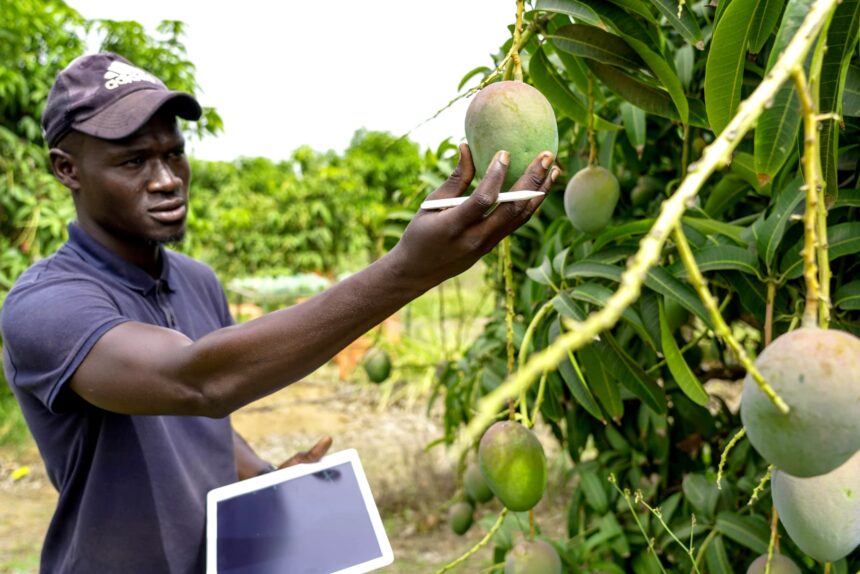
Agriculture in the African continent has never been a second option, as both individuals and governments place high regard on its critical national importance. Yet, farmers across the continent, especially smallholder farmers, constantly face the threat of losing their gains after months of hard work.
Suleiman Dauda Okah, a cassava farmer in Toto village in Nasarawa State, narrated to Yakub Abdulrasheed of Techparley Africa recently, how helplessly he feels whenever trucks carrying his harvest turned back empty-handed.
“Sometimes I have buyers lined up in the city, but the middlemen pull the prices down, and the transporters disappear” he lamented as his months of labor are constantly at risk of going to waste.
Across Africa, millions of smallholder farmers face similar daily frustrations, limited market access, unpredictable pricing, and logistical inefficiencies that turn farming into a high-risk enterprise.
It was only when Mr. Okah joined a local agritech platform that he could connect directly with buyers, secure fair prices, and plan his production efficiently. Okah’s underscores the critical challenge at the heart of Africa’s agricultural sector, that’s, bridging farmers and markets through technology.
Africa produces enough food to feed its population, yet according to the FAO, nearly 45% of farm produce never reaches consumers due to inefficiencies in logistics and market access.
Solving this problem is not just about increasing food supply, it is a lucrative business opportunity, and digital agritech platforms are emerging as the key solution.
As one anonymous investor in the African agritech space explained, “Agritech platforms don’t just sell software; they sell efficiency, predictability, and trust. That is what farmers are paying for.”
Situation Report
Agriculture remains the backbone of Africa’s economy, employing over 60% of the workforce in some countries. Yet, despite its importance, smallholder farmers face systemic challenges, such as fragmented markets, poor logistics, middlemen exploitation, and lack of timely price information.
These challenges depress farmers’ incomes and contribute to post-harvest losses that can reach up to 30% in staple crops, according to a recent study by the Alliance for a Green Revolution in Africa (AGRA). In recent years, digital interventions have begun to transform this landscape.
Agritech platforms act as intermediaries that connect farmers directly with buyers, suppliers, and service providers, providing transparency in pricing, logistics coordination, and financing options. These platforms are not merely tools, they are market enablers.
Aminullahi Olayinka, an llorin-based agribusiness analyst maintained that, “Farmers often know what to plant and when, but without access to reliable buyers and logistics, their efforts rarely translate to profit. A well-designed platform can change that equation completely.”
The Market Size
The market opportunity for agritech platforms in Africa is enormous. The continent has over 33 million smallholder farms, producing a wide variety of crops, fruits, and livestock.
Africa’s digital agriculture market alone is projected to reach $4.5 billion by 2030, growing at a compound annual growth rate (CAGR) of 13.6%, driven by smartphone penetration, mobile payment adoption, and increasing agricultural investment.
Nigeria, Kenya, and South Africa are leading adoption, with smallholder farmers increasingly seeking technology solutions to access markets and improve profitability. Digital platforms provide scalable solutions that address both logistical bottlenecks and financial inclusion.
Investors are taking notice; private equity and venture capital funding for African agritech startups surpassed $1.2 billion in 2024, a record high.
“Farmers are no longer willing to accept the status quo,” said Olayinka. “Platforms that can deliver transparency, reliability, and speed will see explosive adoption.”
The Opportunities
Agritech platforms offer multiple layers of opportunity. At the foundational level, platforms can serve as digital marketplaces, connecting farmers like Okah with urban retailers, food processors, and exporters. By providing real-time pricing information, these platforms help farmers negotiate fairer prices and reduce exploitation by middlemen.
Further opportunities exist in value-added services such as agronomic advisory, weather forecasts, credit facilitation, and logistics coordination. A platform that integrates these services not only creates revenue streams but also enhances customer retention.
“Farmers trust platforms that solve multiple pain points. If you can combine sales, advice, and financing, you build a sticky product that users won’t abandon,” stated startup founder, Farhan Nasirudeen.
Additionally, there is room to leverage data analytics. Platforms can predict crop demand, optimize supply chains, and even offer predictive pricing models to maximize profits for both farmers and buyers.
Major Players
Several agritech startups have already made significant strides across Africa, providing inspiration and competitive benchmarks for new entrants.
In Kenya, Twiga Foods connects farmers directly with retailers, reducing supply chain inefficiencies. Nigeria’s Thrive Agric offers digital financing and market access to thousands of smallholder farmers, while AgroCenta in Ghana focuses on aggregating rural farmers and providing them with market linkages.
South Africa’s Aerobotics applies advanced AI and drone technology to monitor crop health, optimizing yields and market readiness.
These companies demonstrate that a well-executed agritech platform can solve real problems while generating significant revenue. Yet, despite their successes, millions of smallholder farmers remain underserved, leaving vast untapped opportunity for innovative entrants.
Pitfalls to Look Out For
Starting an agritech platform comes with inherent challenges. First, adoption barriers are significant. Many smallholder farmers are unfamiliar with digital tools, and literacy levels vary, necessitating user-friendly interfaces and localized language options.
Second, logistics and infrastructure remain bottlenecks. Roads, storage facilities, and cold chain systems are often inadequate, requiring partnerships with third-party logistics providers or investment in proprietary solutions.
Third, financing is a challenge. Platforms may require upfront capital to facilitate transactions, provide farmer credits, or develop technology. Misjudging cash flow and operational costs can stall growth.
Olayinka cautioned that, “The biggest risk is assuming the technology alone solves the problem. Without understanding farmer behavior, cultural nuances, and logistics, even the best platform can fail.”
Finally, regulatory environments vary across countries, and compliance with agricultural, financial, and data privacy regulations is essential to avoid legal pitfalls.
How to Launch (Including Legal Compliance)
Launching an agritech platform requires careful planning. Begin by conducting a needs assessment in your target region to understand farmer pain points, existing gaps, and potential market size.
Next, design a user-centric platform that integrates marketplace functionality, financial services, and advisory tools. Pilot with a small cohort of farmers to refine the product before scaling.
Formally register the business with relevant national authorities and ensure compliance with agricultural and financial regulations. Partner with mobile payment providers to enable seamless transactions, and explore collaborations with local transporters to handle logistics efficiently.
Operational scalability is critical, as Farhan explained, “Start small, prove value, and then expand. Farmers will only trust you if you consistently deliver results.”
Call for Investors
For global and local investors, including governments, agritech platforms represent a compelling intersection of impact and profitability. The market is massive, adoption is growing, and platforms that deliver value to farmers have strong retention potential.
Investment opportunities exist across multiple dimensions, technology development, logistics, financing, and data analytics. With a growing middle class and increasing demand for food security, agritech startups are positioned to offer both financial returns and social impact.
“Investing in platforms that reduce farmer-to-market gaps is not just profitable, it is transformative,” noted Olayinka. “The sector creates value for the entire ecosystem.”
Caveat: Do Your Own Research
This article is for informational purposes only and does not constitute financial or investment advice. Readers are strongly encouraged to conduct independent research, validate market assumptions, and consult relevant professionals before making business or investment decisions.
_______________________
Bookmark Techparley.com for the most insightful technology news from the African continent.
Follow us on X/Twitter @Techparleynews, on Facebook at Techparley Africa, on LinkedIn at Techparley Africa, or on Instagram at Techparleynews