


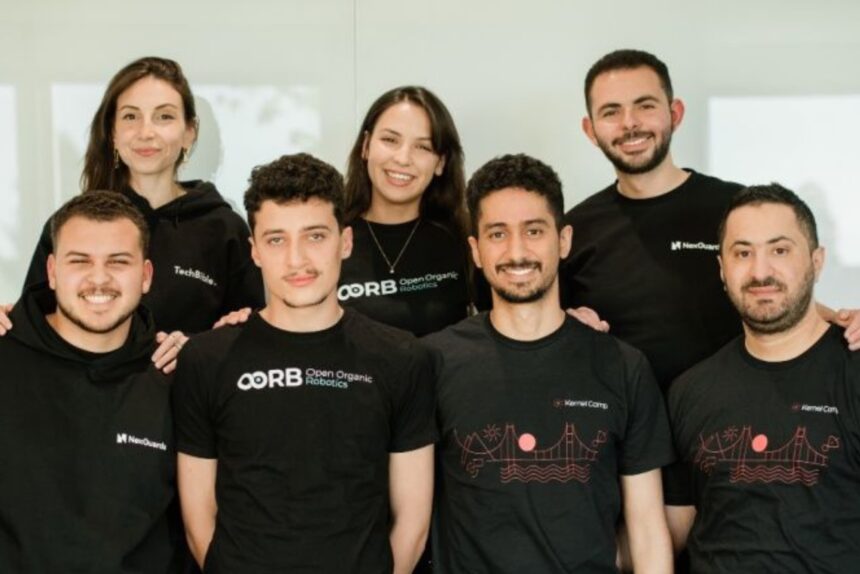
A Jordan-rooted, AI-focused venture capital firm, Propeller, has launched the inaugural cohort of its Kernel Camp residency. The Camp places selected five high-potential startups from across the Middle East and North Africa (MENA) at the heart of Silicon Valley for an intensive eight-week immersion programme.
The initiative is designed to bridge long-standing gaps between MENA’s growing pool of technical talent and the global networks of capital, expertise, and opportunity concentrated in the Bay Area.
As the firm stated, the selected founders are not only being relocated geographically but are being “embedded…into the ecosystem through curated access to the communities and conversations shaping the global AI landscape.”
The programme, which culminates in a high-stakes demo day in May 2026, represents a strategic push to position MENA startups within the global deep-tech conversation and accelerate their growth trajectories through direct exposure to world-class engineers, investors, and operators.
What Does Propeller Do?
Propeller is a venture capital firm with a strong focus on artificial intelligence infrastructure and deep technology. Its investment philosophy centers on identifying technically strong founders building foundational technologies that can scale globally.
Through initiatives like Kernel Camp, the firm extends its role beyond funding to ecosystem-building, actively creating pathways for startups to access critical resources that are often geographically concentrated.
According to Zaid Farekh, the programme reflects a long-term vision, he said:
“Kernel Camp is a statement of our belief in the extraordinary talent emerging from the MENA region… These founders are technically exceptional, and this environment will push them to build faster, think bigger, and connect with the networks that matter most at this stage of their journey.”
This underscores Propeller’s dual role as both an investor and a cross-border enabler of innovation.
What Is Kernel Camp?
Kernel Camp is an annual deep-tech residency programme designed to immerse early-stage, high-potential startups into the operational and cultural fabric of Silicon Valley.
First announced in December 2025 as part of Propeller’s broader cross-border strategy following the launch of its Fund III, the initiative targets founders who are already building full-time and demonstrating early traction.
The programme offers a fully sponsored experience, including housing, curated workshops, weekly guest sessions, one-on-one mentorship with experienced builders, and site visits to leading technology companies and venture firms.
However, its defining feature lies in its immersive design. Rather than simply providing training, Kernel Camp aims to integrate founders into the ecosystem itself.
As noted in the announcement, it is not just about relocation but about ensuring founders become part of “the communities and conversations shaping the global AI landscape.”
Why is This Important?
The launch of Kernel Camp addresses a critical structural gap in the global startup ecosystem. While the MENA region has witnessed a steady rise in technical talent and innovation, founders have historically faced limited access to the networks that drive global scaling, particularly those concentrated in Silicon Valley.
Propeller’s Partner, Hani Azzam, emphasized this collaborative dimensio, “Founders don’t build alone. The Kernel Camp cohort aren’t just here to learn; they’re here to become part of the Silicon Valley ecosystem. We’ve curated an environment where community, technical depth, and cross-border networks converge.”
This approach highlights a shift from isolated startup development to globally integrated innovation, positioning MENA founders to play a more prominent role in shaping the future of deep technology.
What Do the Selected Startups Do?
The inaugural Kernel Camp cohort features five startups from Tunisia, Morocco, Jordan, and Egypt, each operating at the cutting edge of AI infrastructure, developer tools, and cybersecurity.
Among them is OORB from Tunisia, which provides a cloud-based robotics workspace enabling developers to build and test ROS (Robot Operating System) projects directly in the browser.
From Morocco, Eli by Techbible offers an AI Stack Manager that helps companies gain full visibility into their spending on SaaS and AI tools, an increasingly critical need as organizations adopt multiple AI solutions.
Jordan’s Firstflow focuses on onboarding and analytics for AI agents, helping businesses better deploy and understand automated systems.
Egypt’s Nexguards delivers a personalized cyberattack simulation platform aimed at strengthening organizational security awareness. Also from Morocco, Flowbrave is building an intelligent operations platform that transforms static business processes into adaptive, AI-guided workflows.
Collectively, these startups represent a cross-section of emerging technologies that underpin the next wave of digital transformation, particularly in enterprise AI and security.
What Will They Gain After Eight Weeks?
Over the course of the eight-week residency, the selected founders will gain far more than technical insights.
By being embedded in Silicon Valley, they will develop critical relationships with investors, mentors, and peers, while refining their products and go-to-market strategies in a highly competitive environment.
The programme culminates in a demo day scheduled for May 2026, where the startups will present their progress to a curated audience of investors from the Bay Area. This event serves as a gateway to potential funding, partnerships, and global expansion opportunities.
Ultimately, Kernel Camp is designed to accelerate not just individual startups but the broader integration of MENA’s deep-tech ecosystem into the global innovation landscape.
By combining capital, community, and cross-border access, Propeller is betting that these founders will help define the region’s contribution to global technology over the coming decade.
Talking Points
Propeller’s Kernel Camp is an ambitious and strategically sound attempt to bridge MENA’s persistent “ecosystem gap” with Silicon Valley’s dense innovation network, but its impact will ultimately depend on execution beyond symbolism.
While embedding founders in Silicon Valley offers undeniable advantages, access to capital, talent, and market feedback, it also risks reinforcing dependency on Western ecosystems rather than strengthening local innovation infrastructure.
The selection of only five startups raises concerns about scale and representativeness, suggesting a highly curated showcase rather than a systemic solution.
Moreover, eight weeks, while intensive, is arguably too short to meaningfully transform early-stage companies without sustained follow-on support. However, the initiative is still valuable: it accelerates exposure, validates MENA deep-tech credibility, and may catalyze cross-border funding flows.
In essence, Kernel Camp is less a fix for structural weaknesses and more a high-quality amplifier of already promising startups, effective, but not transformative on its own.
_______________________
Bookmark Techparley.com for the most insightful technology news from the African continent.
Follow us on X/Twitter @Techparleynews, on Facebook at Techparley Africa, on LinkedIn at Techparley Africa, or on Instagram at Techparleynews