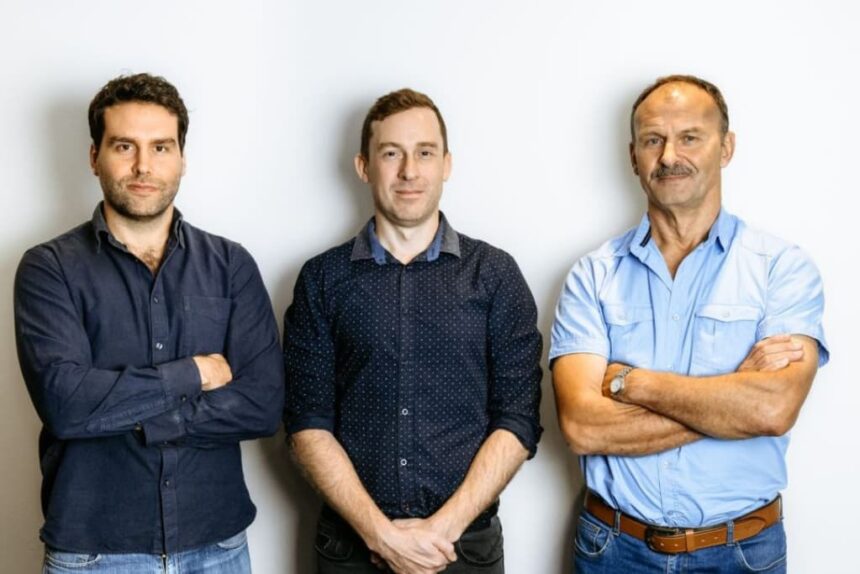
South African med-tech startup, AI Diagnostics, has secured ZAR85 million (approximately US$5.2 million) in fresh funding to accelerate the fight against tuberculosis (TB), one of the world’s deadliest infectious diseases.
The Cape Town-based company is betting on a combination of proprietary hardware and artificial intelligence to transform how TB is detected, particularly in underserved regions where access to advanced diagnostic infrastructure remains limited.
Backed by investors including The Steele Foundation for Hope, iFSP Group, and the Global Innovation Fund, the new capital will support clinical validation, product development, and expansion into emerging markets across Sub-Saharan Africa and Asia.
At the heart of this innovation is a breakthrough, an AI-enabled digital stethoscope capable of detecting TB through lung sound analysis in real time, effectively placing diagnostic power in the hands of frontline healthcare workers.
What is AI Diagnostics and What It Does
Founded in 2020, AI Diagnostics was built on a clear mission, to make healthcare more accessible and affordable by equipping frontline workers with tools that address problems at their source.
In many low-resource settings, early disease detection is hindered by the lack of specialists and diagnostic infrastructure. AI Diagnostics aims to close this gap by developing simple, scalable solutions powered by artificial intelligence.
The company focuses on early screening technologies that allow nurses and community health workers to identify potential TB cases without relying on complex hospital systems.
As Joe Exner, CEO of The Steele Foundation for Hope, noted, the company represents “a clear example of why” backing technically grounded entrepreneurs matters, particularly those “closest to the problems they’re solving.”
By combining medical hardware with AI-driven analytics, the company is redefining how and where diagnosis can happen.
What to Know About Ostium
Central to the company’s innovation is the Ostium digital stethoscope, an AI-powered device designed to detect TB through lung sound analysis. Unlike traditional diagnostic methods that depend on laboratory tests or chest X-rays, Ostium works at the point of care, delivering immediate insights during routine examinations.
Exner highlighted the significance of this breakthrough, describing it as “an AI-enabled digital stethoscope that detects TB through lung sound analysis with point-of-care accuracy that simply wasn’t possible before.”
This capability is particularly transformative in communities where access to X-ray infrastructure or specialist clinicians is limited. In such environments, the device effectively decentralises diagnosis, enabling faster decision-making and earlier intervention.
Complementing the hardware is the AI.TB model, which processes lung sound data in real time.
According to CEO Braden van Breda, “The AI model flags individuals whose lung sounds have signals associated with TB in real time so healthcare providers can refer them for diagnostic testing immediately.”
This immediacy not only improves patient outcomes but also helps reduce the spread of the disease.
Plans for the New Funding
The newly secured ZAR85 million will be deployed across several strategic areas critical to scaling both the technology and the business.
A significant portion will go into clinical research and validation, ensuring the technology meets global medical standards and gains broader regulatory acceptance.
In addition, the company plans to refine both its hardware and AI models, enhancing accuracy and usability.
Operationally, the funding will support the infrastructure required to scale a medical device company, covering manufacturing, distribution, and partnerships across multiple regions.
Geographically, expansion is a key priority. While the company has established a foothold in South Africa, the new funding will enable it to penetrate emerging markets across Sub-Saharan Africa and Asia, regions that bear a disproportionate burden of TB cases.
Traction and Market Capacity
Despite being relatively young, AI Diagnostics has already demonstrated meaningful traction.
The company has received regulatory approval from the South African Health Products Regulatory Authority (SAHPRA), a critical milestone for any medical technology seeking adoption in clinical settings.
To date, its solutions have been used to screen more than 1,000 patients in South Africa, providing early validation of its approach. Beyond its home market, the company is currently conducting clinical research in over 10 countries across Africa and Asia, an indication of both demand and scalability.
The broader market opportunity is substantial. TB remains a major public health challenge globally, particularly in low- and middle-income countries where diagnostic gaps persist.
By targeting these underserved markets with affordable, portable technology, AI Diagnostics is positioning itself at the intersection of healthcare access and technological innovation.
Why This is Important
The significance of this development extends beyond funding or technological advancement, it addresses a critical gap in global healthcare systems. TB continues to claim millions of lives each year, largely because many cases go undetected or are diagnosed too late.
Traditional diagnostic methods are often inaccessible in rural or resource-constrained settings, creating a bottleneck in early detection.
By enabling real-time screening through a simple, portable device, AI Diagnostics is effectively shifting diagnostic capabilities closer to patients.
As van Breda explained, “For health systems trying to close the detection gap, this changes the availability and the geography of screening.”
In practical terms, this means more people can be screened earlier, treated sooner, and prevented from spreading the disease further.
Talking Points
What AI Diagnostics is building is undeniably compelling, bringing AI-powered, point-of-care screening to frontline health workers directly tackles one of the biggest bottlenecks in fighting tuberculosis, early detection in low-resource settings.
However, the ambition risks outrunning the realities. Lung sound–based TB detection, while innovative, still sits in a grey zone of clinical reliability compared to gold-standard diagnostics like GeneXpert or radiography; false positives could overwhelm fragile health systems, while false negatives could be deadly.
The company’s current scale, just over 1,000 patients screened, is far too small to validate broad claims of accuracy across diverse populations, especially given how TB symptoms can overlap with other respiratory diseases.
There’s also a behavioural and systems challenge: adoption depends not just on the device, but on training, trust from health workers, and integration into already strained public health workflows.
That said, if ongoing multi-country trials prove strong sensitivity and specificity, and if the company can price and distribute effectively, this could become a genuinely disruptive layer in TB screening.
For now, it sits in a familiar med-tech tension, high promise, but still needing rigorous proof and system-level fit to avoid becoming another well-funded pilot that struggles at scale.
______________________
Bookmark Techparley.com for the most insightful technology news from the African continent.
Follow us on X/Twitter @Techparleynews, on Facebook at Techparley Africa, on LinkedIn at Techparley Africa, or on Instagram at Techparleynews