



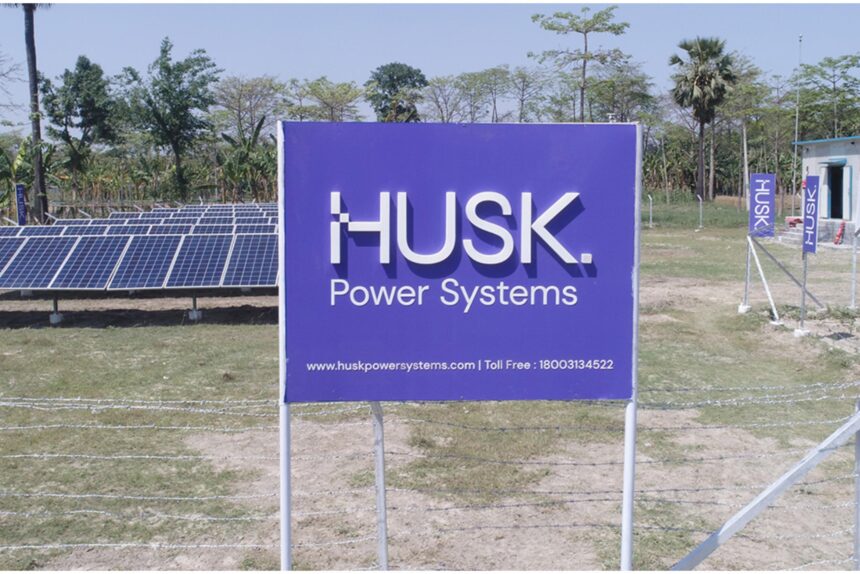
When Husk Power Systems published its first quarter 2026 update, the company was not merely reporting operational figures. It was signalling how the global renewable energy industry is entering a new phase.
The company, which operates distributed renewable energy infrastructure across Africa and Asia, disclosed on LinkedIn that it now has 47.4MW of installed capacity, has connected more than 66,000 customers, impacted 2.2 million beneficiaries, and avoided more than 83,000 tonnes of carbon emissions.
But beyond those numbers lies a bigger story shaping the global energy transition market.
From India and Nigeria to Egypt, Norway, Israel and the United States, renewable energy companies are entering 2026 with stronger earnings, expanding project pipelines, deeper infrastructure ambitions, and increasing investor confidence despite persistent global economic uncertainty.
The first quarter of the year has shown that clean energy companies are no longer positioning themselves simply as solar providers or climate-focused startups. Increasingly, they are presenting themselves as infrastructure businesses operating at the centre of electricity access, AI-driven power demand, industrial transformation, and national energy security.
Husk’s latest quarterly update reflects that evolution clearly.
Husk Pushes Beyond Solar Deployment
A major focus of Husk’s Q1 report was not just expansion, but impact measurement.
The company said it is developing a scalable framework with support from the World Bank Group and Swedfund International to track both the quantitative and qualitative effects of its operations across communities in Nigeria and India.
For renewable energy companies operating in emerging markets, that distinction is becoming increasingly important.
Global investors and development finance institutions are no longer satisfied with deployment figures alone. They increasingly want evidence showing that renewable infrastructure improves livelihoods, stimulates local economies, creates jobs, and expands financial inclusion.
Husk said it has partnered with impact platform Leonardo to conduct regular surveys assessing changes in local economic well-being before and after minigrid deployment. In one of the report’s most notable developments, the World Bank is also supporting the company in conducting a Randomised Controlled Trial in Nigeria focused on isolated minigrids and their socioeconomic impact.
The move reflects how climate finance itself is evolving. Investors increasingly want measurable proof that renewable infrastructure delivers both commercial returns and developmental outcomes simultaneously.
“By launching a redesigned, multilingual digital platform, we have simplified the solar journey and improved energy accessibility for regional customers,” Husk said on LinkedIn.
What You Need to Know
Another important development in Husk’s first quarter update was the expansion of BEEM, its residential rooftop solar business launched in India in 2025.
The company used the quarter to strengthen BEEM’s digital infrastructure by redesigning its platform around customer acquisition, accessibility, and conversion. The updated platform introduced Hindi-language accessibility, educational resources, mobile-first optimisation, and an interactive Solar Savings Calculator aimed at simplifying rooftop solar adoption for regional users.
The strategy reflects a wider trend reshaping the renewable energy market globally.
Clean energy companies are increasingly competing not only through hardware deployment, but through software systems, digital experience, financing accessibility, and customer onboarding infrastructure.
India remains one of the world’s most important rooftop solar growth markets. The government’s solar programme aims to support installation across 30 million homes, with more than 11GW already deployed nationally.
For Husk, BEEM represents more than a residential solar product. It reflects an attempt to build scalable decentralised consumer energy infrastructure within one of the world’s fastest-growing electricity markets.
Global Recognition Strengthens Husk’s Position
The company’s growing global profile also continued during the quarter.
Chief Executive Officer Manoj Sinha joined the Mission 300 Private Sector Council, an initiative involving the World Bank and African Development Bank aimed at mobilising investment to connect 300 million Africans to electricity by 2030.
Husk also received a Future Energy Leaders Award recognising its role in delivering technology-driven renewable energy solutions across underserved markets in Africa and Asia.
The recognition reflects a larger reality shaping the renewable energy sector, in which decentralised infrastructure companies operating in emerging markets are increasingly becoming central players within the global energy transition conversation.
This is particularly significant for Africa, where hundreds of millions of people still lack reliable electricity access and where decentralised renewable systems are increasingly viewed as faster and more commercially viable alternatives to traditional grid expansion.
First Solar Reports Stronger Earnings
While Husk focused on decentralised infrastructure, American solar manufacturing giant, First Solar, delivered one of the strongest financial performances of the quarter.
The company reported $1.04 billion in net sales during Q1 2026, representing a 24 per cent increase compared to the same period last year. It also shipped a record 3.8GW of thin-film solar modules while maintaining 96 per cent utilisation across its US manufacturing facilities.
Perhaps more importantly, First Solar disclosed a sales backlog of 47.9GW valued at approximately $14.4 billion extending through 2030.
The figures underline how global demand for renewable manufacturing infrastructure continues rising as governments seek greater domestic energy resilience amid geopolitical instability and supply chain concerns.
The company’s net income rose to $347 million during the quarter, compared to $210 million during Q1 2025, reinforcing investor confidence in utility-scale solar manufacturing.
Scatec Expand Projects Across Multiple Markets
Norwegian renewable infrastructure company, Scatec, also entered 2026 with stronger project momentum.
During the quarter, the company said it reached commercial operation milestones in Tunisia and Egypt while launching construction activities across South Africa, Romania, Colombia, and the Philippines.
The new projects collectively represent hundreds of megawatts in solar generation capacity alongside battery energy storage systems.
Scatec also advanced its massive 900MW Shadwan wind project in Egypt into backlog, strengthening its long-term infrastructure pipeline.
The company’s continued expansion reflects how governments and utilities globally are accelerating renewable infrastructure deployment as electricity demand rises and pressure mounts to diversify energy systems.
Enlight Renewable and Eco Wave Power Signal Sector Confidence
Elsewhere, Israel-based Enlight Renewable Energy exceeded analyst expectations during the quarter after reporting stronger earnings and revenues than forecasted.
The company posted earnings per share of $0.16 against projections of $0.06, while revenue reached $200 million.
The results triggered a positive market response and reinforced confidence in renewable infrastructure developers capable of scaling generation assets while maintaining stronger financial performance.
Wave energy developer, Eco Wave Power, also used the quarter to strengthen operational efficiency. The company reduced operating expenses by 11 per cent year-on-year while continuing development work tied to wave-powered renewable infrastructure.
Although still an emerging segment within the broader renewable market, wave energy continues attracting attention as countries explore alternative renewable baseload technologies capable of supporting future electricity demand.
AI Infrastructure is Becoming the Next Major Energy Story
One of the most important themes emerging from the quarter was the growing relationship between renewable energy and artificial intelligence infrastructure.
Norwegian infrastructure company, Magnora, significantly expanded its data centre business during the quarter as it pushed deeper into hyperscale infrastructure projects across the Nordics.
The company reached its 10GW project portfolio target partly through investments tied to AI-driven electricity demand.
That development reflects a broader structural shift happening globally.
As artificial intelligence systems, cloud computing infrastructure, and hyperscale data centres expand, electricity demand is expected to rise sharply over the next decade. Renewable energy companies increasingly see this as one of the industry’s largest future growth opportunities.
This is changing how investors evaluate clean energy firms.
Renewable infrastructure is no longer viewed solely through an environmental lens. It is increasingly seen as foundational infrastructure supporting the future digital economy itself.
The Renewable Energy Industry is Entering a More Mature Phase
Taken together, the first quarter performances of Husk Power and other global renewable energy companies suggest the industry is entering a more mature and strategically important phase.
Investors are becoming more selective, rewarding companies capable of demonstrating operational discipline, profitability, infrastructure scale, measurable impact, and long-term resilience rather than speculative growth alone.
The sector still faces major risks, including financing pressures, currency volatility, supply chain instability, and political uncertainty across several markets. Yet the broader direction appears increasingly clear.
Renewable energy companies are evolving from climate-focused startups into critical infrastructure operators positioned at the intersection of electricity access, industrial growth, AI expansion, and global economic transformation.
And increasingly, companies operating across emerging markets such as Husk Power are proving that Africa and Asia may become some of the most strategically important regions shaping that future.
——————-
Bookmark Techparley.com for the most insightful technology news from the African continent.
Follow us on Twitter @Techparleynews, on Facebook at Techparley Africa, on LinkedIn at Techparley Africa, or on Instagram at Techparleynews.