


Kenya-based healthtech startup, Zuri Health, is expanding its fleet of mobile clinics in Nairobi after its first bus reached operational breakeven, providing a proof of concept for a model the company now plans to scale.
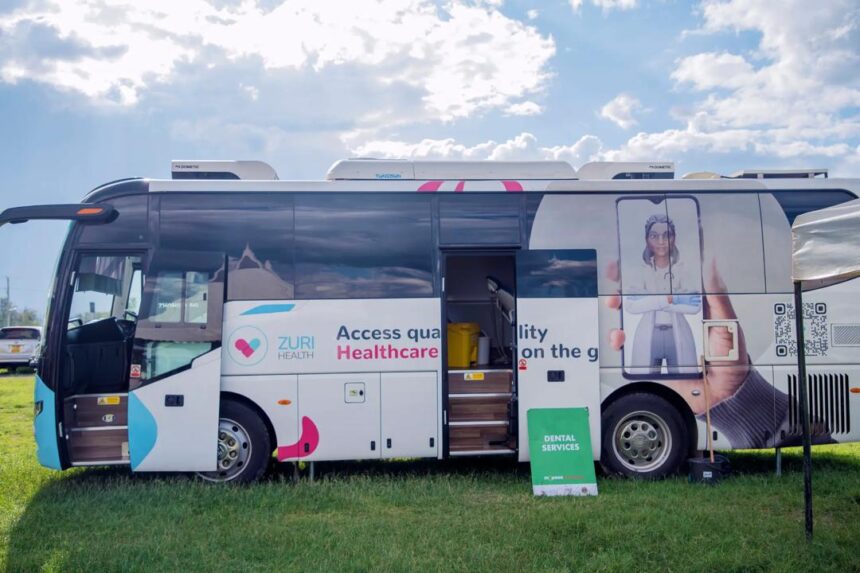
The company has added two additional buses, bringing its total fleet to three. Two of the vehicles function as fully equipped, self-contained clinics powered by solar energy, while a third supports logistics and restocking, enabling continuous operations without reliance on fixed healthcare facilities.
The expansion marks a shift from pilot-stage experimentation to a more structured rollout, as Zuri seeks to establish mobile clinics as a sustainable component of urban healthcare delivery.
What you need to know
Mobile clinics are not new to Kenya, where county governments and non-profit organisations have long used them for outreach programmes. However, these deployments are typically short-term and donor-funded.
Zuri Health is attempting to commercialise the model by operating its clinics daily in high-traffic, high-density areas, turning what has historically been a temporary intervention into a consistent, revenue-generating service.
The approach is designed to address a key barrier to healthcare access, which is time.
For many low-income workers, particularly in the informal sector, the cost of seeking care extends beyond consultation fees to include hours lost travelling to and waiting at health facilities. By positioning clinics closer to where people live and work, Zuri aims to reduce that friction.
Bringing healthcare closer to patients
Founded in 2020, Zuri Health offers primary healthcare through a hybrid model combining telemedicine with physical services. Its mobile clinics, branded as Zuri Express extend that model into underserved urban areas.
“A market trader will not have to close her stall or spend hours travelling to a hospital,” the company’s chief executive, Ikechukwu Anoke, told TechCabal. “We are taking the hospital to them. We validated this over the past three years through medical camps across Kenya.”
According to Anoke, the model has been refined over three years through medical outreach campaigns across Kenya, helping the company better understand patient needs and demand patterns.
Inside the buses, patients can access a range of services, including diagnostics, dental care and cervical cancer screening, alongside general consultations and treatment.
Competing on affordability and convenience
Zuri’s pricing strategy positions it below most private healthcare providers in Kenya. Doctor consultations start at KES 500 (approximately $3.87), with a typical visit, including tests and medication, costing around KES 1,500 ($11.60).
By comparison, consultation fees at private hospitals often range between KES 2,000 ($15.47) and KES 5,000 ($39) or higher, while public hospitals charge between KES 100 ($0.77) and KES 1,500 ($11.60), albeit often with longer wait times and capacity constraints.
The company generates revenue through a mix of walk-in patients and corporate clients that book on-site health checks for employees.
It also works with insurers, including the government-backed Social Health Authority (SHA), as well as Britam and Madison, expanding access beyond out-of-pocket payments.
Data-driven deployment
Zuri’s mobile clinics rotate across locations based on demand patterns derived from past medical camps and data from its digital platform, where patients can consult doctors remotely, book visits and manage follow-up care.
This integration of digital and physical services allows the company to optimise deployment and maintain continuity of care, even as clinics move between locations.
If successfully scaled, Zuri Health’s approach could reshape how primary care is delivered in Nairobi, particularly for underserved populations.
By combining mobility, affordability and data-driven operations, the company is positioning its clinics as an alternative to both overstretched public hospitals and higher-cost private providers.
Talking Points
It is notable that Zuri Health has been able to reach breakeven with its first mobile clinic, a strong signal that its model can move beyond pilot programmes into a sustainable healthcare business.
By operating daily in high-density areas, Zuri is addressing a key but often overlooked barrier to healthcare access — time. For many low-income workers, the ability to access care without leaving their place of work is as important as affordability.
At Techparley, we see this as a practical evolution of the mobile clinic model, shifting from short-term outreach campaigns to a consistent, revenue-generating service embedded within communities.
The integration of telemedicine with physical mobile clinics is also significant. It allows Zuri to combine convenience with continuity of care, ensuring patients can access follow-ups and consultations beyond a single visit.
Pricing plays a critical role here. By positioning its services below most private hospitals while maintaining accessibility through insurance partnerships, Zuri is targeting a segment that is often underserved by both public and private providers.
If executed well, Zuri’s approach could redefine how primary healthcare is delivered in urban Africa, bringing services closer to where people live and work, and reducing the friction that often prevents timely care.
——————-
Bookmark Techparley.com for the most insightful technology news from the African continent.
Follow us on Twitter @Techparleynews, on Facebook at Techparley Africa, on LinkedIn at Techparley Africa, or on Instagram at Techparleynews.