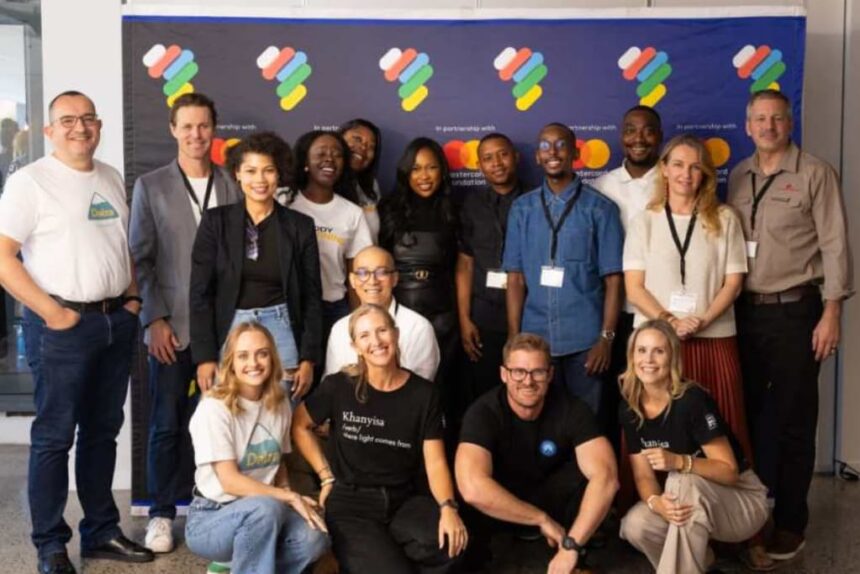
Ten South African education technology startups have been selected for the latest cohort of the Injini Mastercard Foundation EdTech Fellowship. This is a high-impact initiative designed to accelerate innovation in learning across the continent.
The programme, now in its fourth year, offers a blend of grant funding, mentorship, market access, and technical support to early-stage companies tackling some of Africa’s most pressing education challenges.
According to organisers, the selected ventures will participate in a “specialised six-month acceleration programme designed to scale their impact and improve educational outcomes for all learners”.
In addition to this, participants will also benefit from a broader ecosystem aimed at enhancing equity, accessibility, and quality in education.
Emphasising the programme’s deeper mission, Injini’s executive director, Krista Davidson, noted that “this cohort represents a powerful shift toward ensuring that no learner is left behind,” highlighting a growing focus on inclusive and technology-driven learning solutions.
What is Injini and what it does
Founded in 2017, Injini is a non-profit organisation dedicated exclusively to improving educational outcomes across Sub-Saharan Africa.
Operating as part of the UVU Africa Group, Injini stands out as the continent’s only edtech-focused accelerator, combining startup support with research-driven insights through its Injini Think Tank.
Its core mission revolves around increasing “the quality, accessibility, and relevance of education in the region,” achieved by backing innovative startups that leverage technology to solve systemic learning challenges.
Beyond funding, Injini plays a strategic role in shaping Africa’s education ecosystem by connecting entrepreneurs with policymakers, educators, and global partners.
What to know about this programme
The Injini Mastercard Foundation EdTech Fellowship is structured as a rigorous, six-month acceleration programme tailored specifically for education-focused startups. Participants undergo intensive development aimed at refining their products, strengthening their business models, and expanding their reach.
The programme is not limited to financial support alone. It includes hands-on mentorship, coaching, and product evaluation, alongside bespoke market research that helps startups better understand their users and scale effectively.
Importantly, the initiative also provides access to networks and distribution channels that are often difficult for early-stage African startups to secure independently.
The fellowship, according to report, “empowers eligible startups with direct grant funding, product quality evaluation, intensive skill development, coaching, mentorship, bespoke market research, and market access,” making it one of the most comprehensive edtech support programmes on the continent.
How Injini-Mastercard partnership shapes the initiative
The collaboration between Injini and the Mastercard Foundation significantly amplifies the scale and impact of the fellowship. The Mastercard Foundation, known globally for its focus on advancing education and financial inclusion, brings both financial resources and strategic direction to the programme.
This partnership enables the fellowship to provide meaningful grant funding, amounting to ZAR1 million (approximately US$61,000), as well as global quality assurance mechanisms, including formal pedagogical evaluation and certification.
It also strengthens the programme’s credibility, positioning it as a key driver of education innovation not just in South Africa, but across Africa. More importantly, the collaboration reflects a shared commitment to equity.
As Davidson explained, the programme is “intentionally deepening our commitment to equity in education,” ensuring that innovation does not exclude vulnerable or underserved populations.
The selected startups and the role of AI in their solutions
The latest cohort comprises ten startups offering a diverse range of solutions aimed at transforming education delivery.
These include platforms such as AdvantageLearn, Buddy Learning, Dalza, IncludEDU, Inclusive Solutions, Khanyisa Developmental Centre, Tangible, The Marking App, ThinkShift, and Young Aspiring Thinkers (YAT).
A defining feature of this cohort is the strong integration of artificial intelligence across several solutions. From WhatsApp-based AI tutoring services to AI-powered assessment tools and career guidance platforms, the startups are leveraging advanced technologies to personalise learning, automate evaluation, and improve accessibility.
This growing reliance on AI points to a shift in how education challenges are being addressed, moving from traditional classroom limitations to scalable, data-driven solutions capable of reaching millions of learners across diverse contexts.
What benefits are there for the participating startups
Participation in the fellowship offers startups a multi-layered support system that goes beyond immediate financial relief. In addition to grant funding, participants gain access to expert mentorship, global-standard product validation, and specialised market insights generated by Injini’s team of education researchers.
The programme also provides critical exposure and networking opportunities, connecting founders with investors, partners, and education stakeholders. This combination of resources is designed to position startups for long-term sustainability and growth, rather than short-term survival.
By the end of the programme, participating companies are expected to emerge with stronger products, clearer market strategies, and enhanced capacity to scale their solutions across new regions.
Why this matters
The significance of the Injini Mastercard Foundation EdTech Fellowship lies in its potential to reshape Africa’s education landscape. With millions of learners still facing barriers to quality education, initiatives like this provide a pathway for scalable, technology-driven solutions to bridge the gap.
Crucially, the programme’s emphasis on inclusivity ensures that innovation does not widen existing inequalities.
As Davidson put it, the focus is on “supporting entrepreneurs who are specifically addressing accessibility, whether through assistive technologies for learners with disabilities or inclusive platforms for marginalised communities.”
In a region where education systems often struggle with limited resources and infrastructure, experts believe that, empowering startups to deliver flexible, digital solutions could prove transformative.
By investing in innovation at the intersection of technology and education, Injini and its partners are not just supporting businesses, they are laying the groundwork for a more inclusive and resilient learning ecosystem across Africa.
Talking Points
What Injini is doing sits in that familiar space where strong intent meets structural limitations.
On one hand, its targeted focus on edtech, coupled with backing from the Mastercard Foundation, gives it a level of credibility and ecosystem depth that many African accelerators lack. Also, its emphasis on accessibility, assistive technologies, and underserved learners is directionally right in a continent where inequality in education is stark.
However, the model still leans heavily toward pilot-stage optimism rather than system-wide transformation. A six-month accelerator, even with funding and mentorship, rarely solves the deeper constraints of African education, such as infrastructure deficits, policy bottlenecks, affordability, and teacher capacity, which ultimately determine whether these startups scale or stall.
There is also a recurring risk that such programmes over-index on “innovation theatre,” showcasing AI-powered tools and sleek platforms without clear evidence of long-term learning outcomes or adoption at scale in low-resource settings.
That said, dismissing Injini would be shortsighted; it is building a necessary pipeline of experimentation and entrepreneurial energy in a sector that desperately needs both.
The real test, however, is not in the number of cohorts or startups supported, but in how many of these ventures survive beyond the accelerator, achieve meaningful reach, and demonstrably improve educational outcomes across diverse African contexts.
_______________________
Bookmark Techparley.com for the most insightful technology news from the African continent.
Follow us on X/Twitter @Techparleynews, on Facebook at Techparley Africa, on LinkedIn at Techparley Africa, or on Instagram at Techparleynews